In This Episode
- Call Congress – 202-224-3121
- Subscribe to the What A Day Newsletter – https://tinyurl.com/y4y2e9jy
- What A Day – YouTube – https://www.youtube.com/@whatadaypodcast
Follow us on Instagram – https://www.instagram.com/crookedmedia/
TRANSCRIPT
Jane Coaston: It’s Tuesday, March 3rd, I’m Jane Coaston, and this is What a Day, the show that felt so bad for Oklahoma Republican Senator Markwayne Mullin speaking on Fox Business Monday. It really is tough to keep your Middle East conflicts straight.
[clip of Senator Markwayne Mullin] But it’s up to the Iraqi people, or I’m sorry, the Iranian people to choose their next leader.
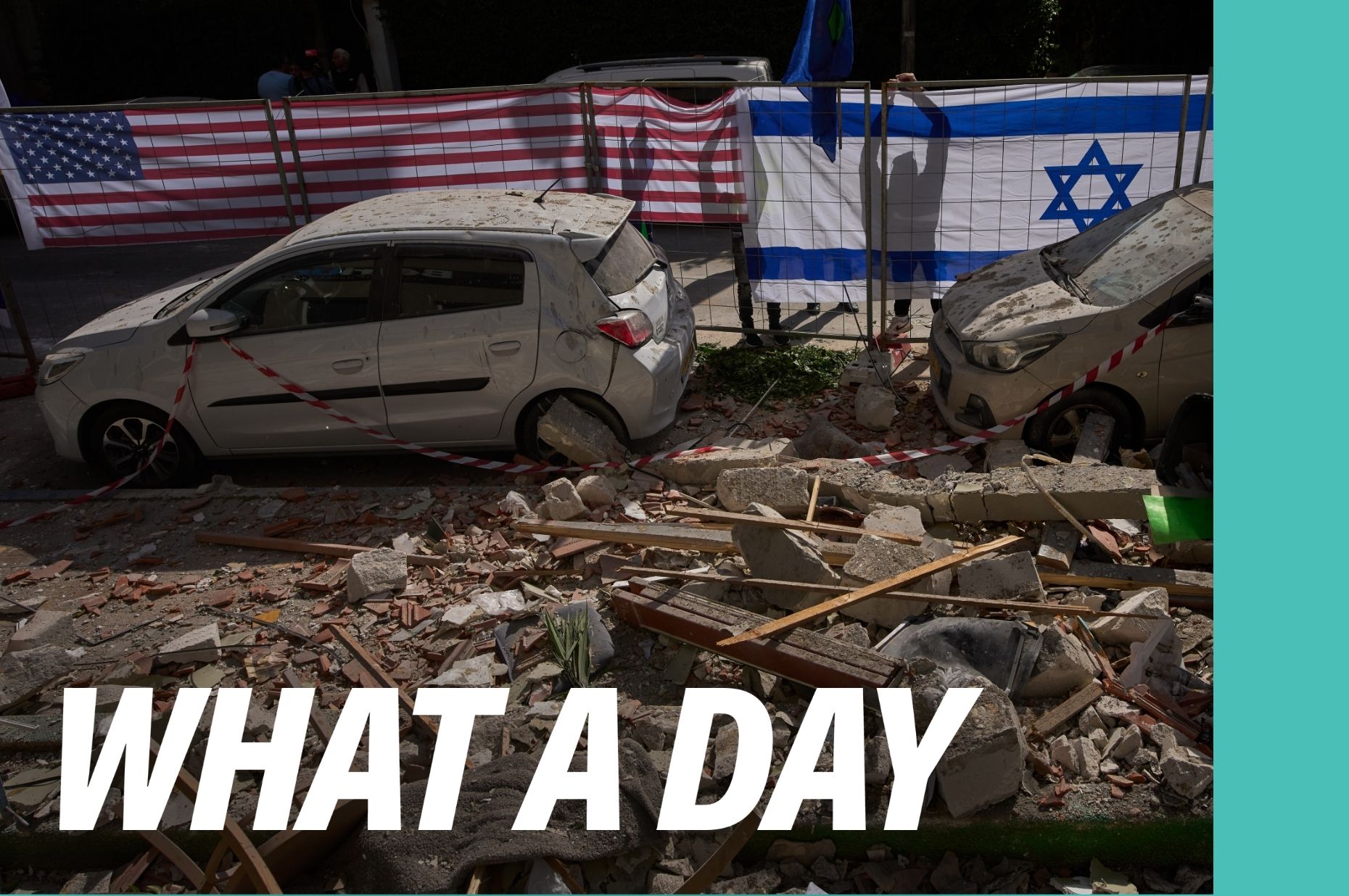
Jane Coaston: I know, it’s such an easy mistake to make. [music break] On today’s show, First Lady Melania Trump presides over a United Nations Security Council meeting about protecting children in conflict, something the Trump administration definitely cares about and its primary day for voters in three southern states. But let’s start with the war in Iran and the battle over what to do about it in Congress. As of our recording time on Monday, the U.S. and Israel are continuing to attack targets across Iran. And in the first public address by a Trump administration official since the attacks began, Defense Secretary Pete Hegseth told reporters, or more accurately, yelled at reporters on Monday that it’s really none of their business or yours what the U.S. is doing there.
[clip of Pete Hegseth] But going forward, why in the world would we tell you, you, the enemy, anybody what we will or will not do in pursuit of an objective? We fight to win. We fight to achieve the objectives the President of the United States has laid out. And we will do so unapologetically.
Jane Coaston: But according to the War Powers Resolution of 1973, it actually is Congress’s business. And lawmakers weren’t fully briefed either, until, hopefully, today. Members of the Trump administration, including Secretary Hegseth, are briefing all of Congress on what, exactly, the Trump Administration’s objectives are. Because I still have no idea why the United States started bombing Iran in the first place. But according a Twitter post from White House Press Secretary, Karoline Leavitt, the Administration’s objective are clear. Destroy Iran’s military capacity, and ensure the country can’t develop a nuclear weapon. No regime change needed. Hegseth said the same thing in his presser, and Secretary of State Marco Rubio made similar points in his own comments to reporters on Monday.
[clip of Marco Rubio] We would not mind, we would not be heartbroken, and we hope that the Iranian people can can overthrow this government and establish a new future for that country. We would love for that to be possible, but the objective of this mission is the destruction of their ballistic missile capabilities and of their naval capabilities.
Jane Coaston: But hang on a second, because Donald Trump suggested on Saturday that the point of the strikes was freeing the Iranian people from the Islamic Republic. In a video message posted as bombing began, Trump told Iranians that this was the time for them to take over the government.
[clip of President Donald Trump] Now is the time to seize control of your destiny and to unleash the prosperous and glorious future that is close within your reach.
Jane Coaston: Sounds regime changey to me. But there’s also the question of why? Why was Iran a threat so terrifying that the United States needed to bomb the country now? Was it nuclear weapons, intercontinental ballistic missiles? According to Secretary Rubio on Monday, no.
[clip of Marco Rubio] We knew that there was going to be an Israeli action, we knew that that would precipitate an attack against American forces, and we knew that if we didn’t preemptively go after them before they launched those attacks, we would suffer higher casualties and perhaps even higher than those killed.
Jane Coaston: That is what Rubio described as the, quote, “imminent threat.” If Israel attacked Iran, Iran would then attack the United States, which is not what I thought imminent meant. It sure seems like there are a lot of questions members of Congress need to be asking, but my question is, will they? And will it matter? So for more on what Congress will do on Iran, I spoke to Nicholas Wu. He’s a congressional reporter for Semafor. Nicholas, welcome back to What a Day.
Nicholas Wu: Thanks so much for having me!
Jane Coaston: The House and the Senate were already set to vote on War Powers resolutions before the United States and Israel bombed Tehran. What were these resolutions originally intended to do?
Nicholas Wu: These resolutions were basically intended to try to rein in any kind of military action against Iran and you know prior to the strikes this past weekend and through this week, these were almost a preemptive war powers resolution. But now it’s you know a very much a live issue with military action in the region.
Jane Coaston: Are you hearing of anyone changing their votes now that this has actually happened? Like, how has the conversation changed now that we’re, you know, bombing Iran?
Nicholas Wu: Well, it’s kind of interesting. There’s folks really in both parties that might cross lines here. You know, Republican leaders in both chambers are really trying very hard to kill these war powers resolutions, but there’s a few folks kind of more from like the MAGA, almost in some ways more isolationist wing of the Republican party who are really skeptical of military action generally. And so some of them like Warren Davidson of Ohio are saying that they really want to hear from the administration when they brief all of Congress to hear what their rationale is, and folks like him are really sticking their vote on it. On the other side, you know, there’s some Democrats like you know Greg Landsman of Ohio who are saying that they are going to oppose the War Powers Revolution because they do support the military action against Iran.
Jane Coaston: Now, there are a lot of steps a War Powers Resolution would need to go through before becoming law. What what does that look like?
Nicholas Wu: Well, we’ve got to remember that you know the Senate filibuster still exists and this is something that both chambers would have to pass and you know there’s no guarantee that you know you can get a majority in both the House and the Senate, let alone the super majority that you need in the Senate to break a filibbuster.
Jane Coaston: So just to be clear, they would need to get 60 votes to make it filibuster proof.
Nicholas Wu: That’s right and they’re almost certainly not going to get that they’ll come up short and Democrats are already acknowledging that. They’re saying that this is just the first step to even have the debate is important. And for that matter, they can continue to force this vote, especially as the president has been saying that this, uh, conflict could go on for quite some time.
Jane Coaston: But let’s say, theoretically, one of these resolutions does pass, and there’s somehow enough support to override an inevitable veto from Trump, how would the resolution even be enforced?
Nicholas Wu: That’s where we get into kind of uncharted territory. You know, we all learned from Schoolhouse Rock, we all learned back in school that the president has to go in front of Congress to ask for permission to wage war. But, you know, for so long, Congress has ceded a lot of that power over to the president. And the administration has been saying that, you know they can wage these strikes against Iran because of these existing authorizations from military force that were passed by Congress. But, you know there’s a lot debate around that. And how this might even play out if, say Congress did in fact try to rein in the administration and the administration didn’t comply.
Jane Coaston: I’m aware this is kind of a big question, but I’m just thinking back to the last couple of presidential administrations and we’ve seen so many times where presidents will you know bomb other countries or do actions that are war-adjacent or war-like, but don’t go to Congress. Why did Congress start ceding that power pretty much after the Iraq War?
Nicholas Wu: It’s something that you know really both parties are guilty of doing ever since the Iraq war, whether in Democratic administrations, military force has been used without Congress’s authorization and same with the Trump administration. And it’s the argument that the administrations on both parties will often make is that you know they have to be able to act quickly without having to go to Congress, which will take time, they’ll have to debate. And the speed required to use military force might not align with all of the procedures that would fall with that. At the same time, we do see kind of the partisan lines hardening any time the opposing party’s president uses force. We’ll see Republicans sometimes come out against a Democratic president and vice versa.
Jane Coaston: There have been parallels drawn between this war in Iran and the war in Iraq from 2003. I know I’ve been making that parallel, but there are differences. For one, President Bush actually went to Congress and asked for permission before dropping bombs. But by 2023, many lawmakers said they regretted approving his request and the Senate repealed the authorization. From what you’ve observed, are lawmakers keeping the lessons of the war in Iraq in mind at all?
Nicholas Wu: It’s something that’s certainly fresh for a lot of lawmakers, especially since you know now, two decades on from that, we have quite a few members of Congress who did serve in Iraq and Afghanistan. And we see lawmakers really getting quite personal in talking about their experiences serving in those wars and and the memory of that in how they think about you know approving congressional authorization for the use of force or or supporting the use of U.S. force against Iran more generally. And so um it’s been a very interesting dynamic to follow as this debate unfolds.
Jane Coaston: On top of all of this, and this feels, I mean, it’s so important, but also it feels kind of like an aside, Americans could feel this war in their wallets with, say, oil prices soaring, which I know kind of might help Democrats and might hurt Republicans, especially with regard to the affordability message. Do lawmakers have plans to help or are they talking about this?
Nicholas Wu: There are very preliminary discussions, it seems, that some lawmakers are having about you know what to do about any potential increases in gas prices, for example. But you know its the conflict’s still unfolding. There’s a lot of questions about what this will do to global markets and the price of oil. And this is something that Congress will definitely have to consider if the impacts are felt more severely.
Jane Coaston: You follow Congress day in, day out. What do you expect will actually happen here? Will a War Powers Resolution pass? Where are we going?
Nicholas Wu: A War Powers Resolution is almost certainly not going to pass the House or Senate. But what is going to be interesting to follow over the coming days, and then potentially if this comes up again in the future, is the fractures that we’re going to see in both parties really on these votes, since you know among Republicans we have some of the more isolationist voices who are very skeptical of the use of military force, and among Democrats you do have some more pro-Israel folks who are more inclined to support the use of force against Iran, even if they disagree with Trump himself.
Jane Coaston: Nicholas, as always, thank you so much for joining me.
Nicholas Wu: Thanks so much, Jane.
Jane Coaston: That was my conversation with Nicholas Wu, congressional reporter for Semafor. We’ll get to more of the news in a moment, but first, have I ever told you that you’re the best audience ever? Because you are. If you want to be even better, please subscribe. Leave a five-star review on Spotify and Apple podcasts, watch us on YouTube, and share the show with your friends. More to come after some ads. [music break]
[AD BREAK]
Jane Coaston: Here’s what else we’re following today.
[sung] Headlines.
[clip of President Donald Trump] Whatever the time is, it’s okay. Whatever it takes, we will always. And we have, right from the beginning, we projected four to five weeks, but we have capability to go far longer than that.
Jane Coaston: President Trump told attendees at a White House ceremony to award medals of honor Monday that from his vantage point, the timeline for the U.S. War with Iran is whatever he says it is. Though the four to five weeks figure is up a bit from the quote, four weeks or less that he gave the Daily Mail just a day before. What’s a 25% longer war between adversaries? Trump took a moment to address the elephant in the room though, insisting he will not get bored, no matter how long the war drags on.
[clip of President Donald Trump] I never get bored. If I got bored, I wouldn’t be standing here right now, I guarantee you that, to go through what I had to go though.
Jane Coaston: If I never got bored, I would not repeatedly tell people I never got bored. But that’s just me.
[clip of First Lady Melania Trump] The U.S. stands with all of the children throughout the world. I hope soon peace will be yours.
Jane Coaston: First Lady Melania Trump on Monday presided over a United Nations Security Council meeting that focused on children in conflict. The First Lady acknowledged the meeting came amidst, quote, “challenging times.” You know, seeing as the United States and Israel are waging a war against Iran, and there are credible claims that dozens of children were killed when a school was hit in early strikes. According to the UN, First Ladies have taken part in Security Council meetings, but this was the first time a sitting First Lady presided over one. Melania Trump urged members of the Security Council to quote, “safeguard learning,” adding quote, “enduring peace will be achieved when knowledge and understanding are fully valued within all our societies.” Okay Miss Universe. She spoke about protecting children’s access to education and technology in conflict but she might want to compare notes with her husband about that because his administration has cut funding for a slew of UN agencies that work on those very issues. Actually, they seem like they’d have a lot to discuss if they ever got to chatting. Primaries are underway today in Texas, North Carolina, and Arkansas. Voters in all three states will choose U.S. Senate candidates for the midterms, but Texas has raised such a distinction of being the most expensive Senate primary ever. Taxing candidates and their backers spent, wait for it, more than $120 million on campaign ads. What did this cash buy? On the Democratic side, a super PAC supporting state representative James Talarico has put out ads claiming the GOP is spending money to boost his opponent, Congresswoman Jasmine Crockett. Last week, Crockett earned an endorsement from former Vice President Kamala Harris, who recorded a robocall in support. And on the Republican side, it’s a race to the bottom, with incumbent Senator John Cornyn running against Attorney General Ken Paxton. If you’re in Texas and watch TV, you’ve definitely heard that Paxton’s wife accused him of adultery. And you’d know that he’s running to the right of Cornyn. But as we talked about last week, because it’s the GOP, the two candidates have united in villainizing Texas’ Muslim community. So let’s hope neither of them has what it takes to win in November.
[clip of unknown House Commitee member] This is a deposition of former President William Jefferson Clinton conducted by the House Committee on Oversight and Government Reform under the authority granted to it pursuant to House Rule 10.
Jane Coaston: A House committee investigating convicted sex offender Jeffrey Epstein released videos on Monday of former President Bill Clinton and former Secretary of State Hillary Clinton answering questions about the late financier. They both sat for hours-long closed-door depositions last week, months after fighting congressional subpoenas. Both Clintons distanced themselves from Epstein and repeated what they’d said before. Bill didn’t know him well, and Hillary didn’t know him personally at all. The former Democratic president said he remembered first meeting Epstein when he flew aboard his private jet in 2002 for the Clintons’ humanitarian work. Clinton said his relationship with Epstein ended in 2003.
[clip of unknown House Commitee member] When did you first learn of Jeffrey Epstein’s crimes?
[clip of Bill Clinton] I think in 2008, when he was prosecuted, I didn’t, there was nothing that I saw when I was around him that made me realize he was trafficking women.
Jane Coaston: As for the former Secretary of State.
[clip of Hillary Clinton] I do not recall ever meeting Jeffrey Epstein in preparation for this hearing. I was told that he attended an event at the White House that was put on by the White House Historical Association, but I have no recollection of that.
Jane Coaston: And that’s the news. [music break]
[AD BREAK]
Jane Coaston: That’s all for today. If you like the show, make sure you subscribe, leave a review, get me a dinosaur, and tell your friends to listen. And if you’re into reading, and not just about how a triceratops skeleton that’s more than 66 million years old is now available for sale, like me, What a Day is also a nightly newsletter. Check it out and subscribe at Crooked.com/subscribe. I’m Jane Coaston, and the tricerotops’ name is Trey. Trey the Triceratops. Again, please get me this dinosaur. It’s just like $5 million. What a Day is a production of Crooked Media. It’s recorded and mixed by Desmond Taylor. Our associate producer is Emily Fohr. Our producer is Caitlin Plummer. Our video editor is Joseph Dutra. Our video producer is Johanna Case. We had production help today from Greg Walters, Matt Berg, Sean Allee, and Ethan Obermann. Our senior producer is Erica Morrison, and our senior vice president of news and politics is Adriene Hill. Our theme music is by Kyle Murdock and Jordan Cantor. We had help today from the Associated Press. Our production staff is proudly unionized with the Writers Guild of America East. [music break]