


In This Episode
- Call Congress – 202-224-3121
- Subscribe to the What A Day Newsletter – https://tinyurl.com/3kk4nyz8
- What A Day – YouTube – https://www.youtube.com/@whatadaypodcast
Follow us on Instagram – https://www.instagram.com/crookedmedia/
TRANSCRIPT
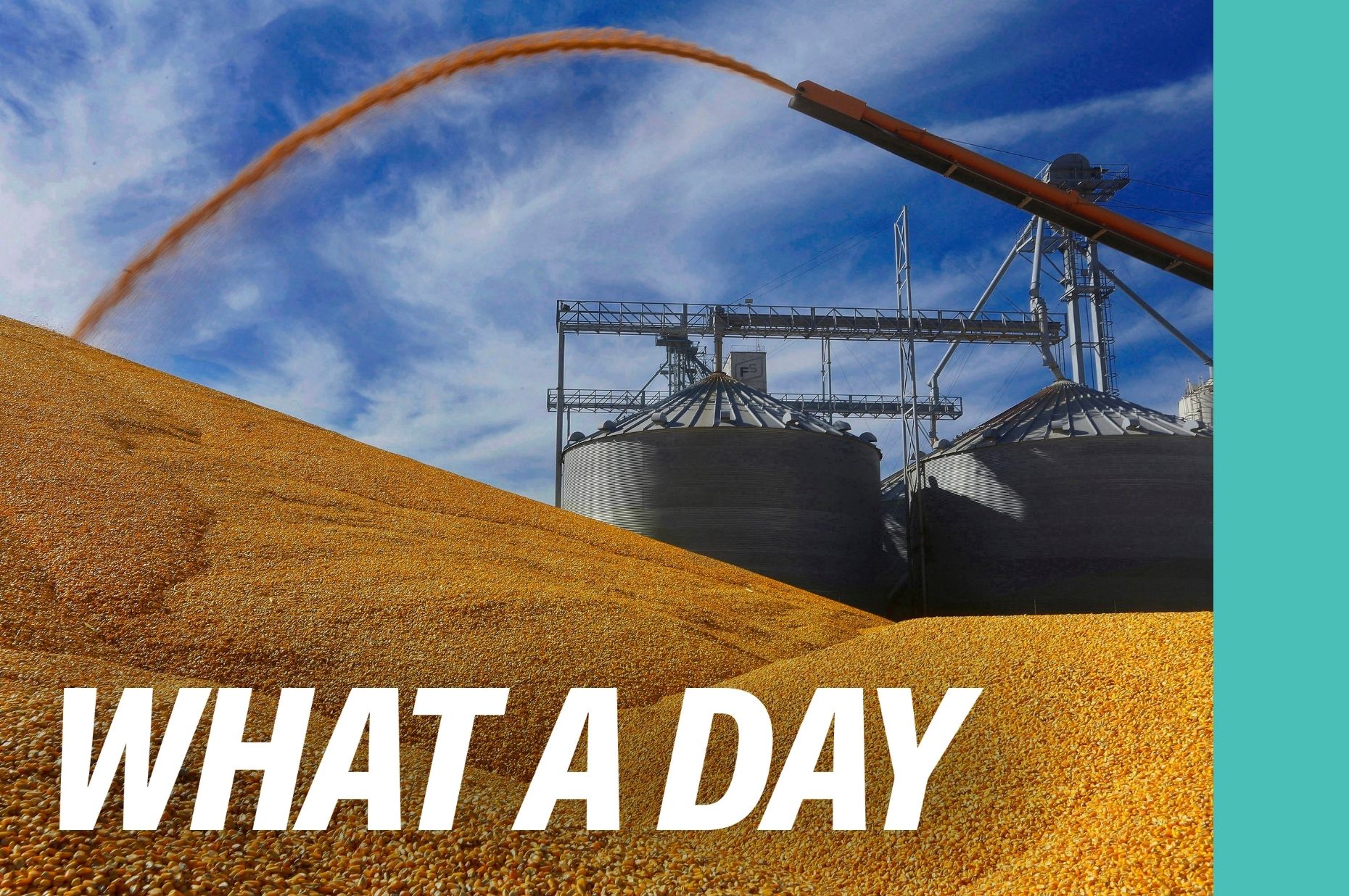
Jane Coaston: It’s Monday, October 27th, I’m Jane Coaston, and this is What a Day, a show that read a Wall Street Journal piece about how the big thing holding robots back is that researchers can’t create an equivalent to the human hand, and thought, I’m actually okay that robots do not have humanoid hands. Actually, I’d rather they never have humanoid hands. [music break] On today’s show, President Donald Trump finds a private billionaire donor to pay US military service members during the government shutdown. And US beef farmers beef with Trump over beef. But let’s start with tariffs, one of Donald Trump’s favorite things. That view is probably not shared by most American farmers. Farmers who are getting hit hard by Trump’s trade war with China, the predominant buyer of American soybeans. Trump is in Asia this week, and on Sunday, Chinese and American negotiators announced that they had agreed to a quote, “framework of a deal on tariffs.” If you’re like me, that sounds a little bit like Trump’s concepts of a plan on healthcare from 2024, and doesn’t answer the real anxieties thousands of American farmers are feeling right now. Remember that during Trump’s first term in office, a trade war with China resulted in price declines for soybeans hitting 30%, which led to massive bailouts like $32 billion in 2020 alone massive. And now farmers are facing more of the same, with no certainty of another bailout this time. But don’t worry. Treasury Secretary Scott Bessent feels the pain of the American soybean farmer. Here he is Sunday on ABC News this week.
[clip of Scott Bessent] Well, Martha, in case you don’t know it, I’m actually a soybean farmer, so I have I have felt this pain too. And there are a couple of things happening here.
Jane Coaston: Just a quick fact check. Scott Bessant, who is worth an estimated $600 million, is not a soybean farmer. But according to his financial disclosures, he owns land used for soybean and corn farming, land that generates rental income for him to the tune of between $100,000 and $1 million a year. So not a soybean farmer, more of a soybean landlord. But Phil Verges is a soybean farmer. He’s been farming corn and soybeans in western Wisconsin for decades. And he came up during our conversation with Wisconsin Democratic Senator Tammy Baldwin a few weeks ago. So we decided to call Phil and talk about what he’s seeing and hearing from farmers just like him. Phil, welcome to What a Day.
Phil Verges: Well, thank you, Jane. It’s great to be with you today.
Jane Coaston: When we spoke with Wisconsin Democratic Senator Tammy Baldwin a week or so ago, she mentioned having a conversation with you about the impact tariffs have had on your business. But before we get into that, can you just tell me about what you do?
Phil Verges: Well sure. I’ve been a lifelong farmer. It’s hard to believe it’s been about forty five years now. Out of college, was dairy farming with my dad for a number of years and for the last thirty years I’ve been a crop farmer. I grow soybeans, corn and some hay. About five hundred acres I farm. One man show, do it all alone. A lot of places, you know, interview these guys that they run thousands of acres. I’m in today’s world more on the smaller side, but uh it definitely keeps me busy and uh you know it’s something I’ve always enjoyed doing. Being out with nature every day and you know, being your own boss, stuff like that. So it’s been a real pleasure to be able to do what I’ve liked all my life.
Jane Coaston: So what happened to your business when tariffs were implemented at the federal level?
Phil Verges: Well, it’s it’s it’s been uh tough on things. You know, the the first round of tariffs was back in ’18 or ’19, and before that China was buying about one third of the soybeans that we produce here in the US, and that you know is a tremendous market, a market that we’ve been building for decades, really. And that first round of tariffs, it definitely depressed our prices. It was a shock to our market. Um. And I think it set the stage for China to be less dependent on us. And in the meantime, they’ve definitely invested in South America and switched their business there. Now with the latest round of tariffs here this current year, that’s kind of the nail in the coffin, I would say, as far as just our reputation globally with our trading partners. And that has, you know, had dramatic effects on the prices that we’ve been receiving for the crops that we grow. Currently with today’s prices, I’m losing probably about eighty-five dollars an acre on the soybeans that I’m growing. Corn has been affected as well. Um. Depending on how the yields come in. You know, we hopefully are making a little money on corn, but that remains to be seen yet.
Jane Coaston: Yeah, I I wanna ask about those first tariffs back in 2018. How did those affect your bottom line and your ability to just make ends meet?
Phil Verges: Well, it was tough. The twenty teens were difficult years um with prices as they were. Then the tariffs came in, dropped prices even more. You know, for us in our family, we relied on credit card debt to get us through some of those years just to pay our our living expenses because we were making little or no money on the farm in those times. So yeah, it had a very significant impact on us.
Jane Coaston: Was your business able to rebound in any way from those tariffs between 2018, 2019 and the end of the Biden administration?
Phil Verges: Oh and it wasn’t related to the tariffs at that time. But we, you know, after COVID, there were some global weather issues, some serious droughts in the US and South America. We we had less crops produced, so that did result in some considerable raises in our the prices that we received for our corn and soybeans and other other grains. And that did help a lot. We were able to kind of catch up a little bit on all of the debts that we had accrued from the first round of tariffs, get back on our feet a little bit. But you know, now we’ve had bountiful crops here and in South America, and now with the latest round of tariffs, it’s it’s making it uh very difficult, hard to find markets for our crops. Um. We’re able to sell them to the grain terminals, but we we take in most cases considerably less than what it costs to produce them. And it isn’t only the the prices that we receive for the products like the soybeans that we grow, but a huge part of it is the increase in our costs. Our fertilizer costs are up significantly for next year. So we’re gonna be paying more for inputs and you know, potentially getting considerably less for our products.
Jane Coaston: Yeah, why are those costs going up?
Phil Verges: Well, a lot of the fertilizer that we use here in in the United States uh comes from other countries. Canada is a big supplier of our pot ash, I believe some of our phosphorus. We don’t have a lot of mines for these these kind of fertilizer commodities here in the US. So a lot of it gets shipped in from abroad and the tariffs are having a significant impact on that. So that is creating price squeezes. I said our inputs are going up and our the price that we get for what we grow is is going down. So it makes it very difficult.
Jane Coaston: How are you getting by right now?
Phil Verges: Well, for me, Jane, I you know, I’m getting close to retirement. Um. We’re fortunate enough to have paid down considerable amount of our debts over the a lifetime of farming. And unfortunately we’ve we’re pulling money out of our retirement savings to make ends meet here lately, the last year or so. And that’s you know, difficult because we’re in the years that we want to be putting more away so we can prepare for retirement. I’m questioning whether or not I might have to retire early just to, you know, stop the bleeding, so to speak, before I dole into all my retirement savings. So that’s that’s a real challenge for us. I I think if I was ten years younger, I would probably be in a situation of, you know, seriously considering stopping farming and having to find, you know, a job off the farm. So but where we are in our lives right now, we are limping into retirement, I guess you could say. [laugh]
Jane Coaston: Yeah, I think that that gets to something I was thinking about, which is that, you know, there are farmers who are younger than you. There are so many people who still want to and obviously love farming in America. How are your fellow farmers who are younger doing? And how do you think all of this affects the future of American farming?
Phil Verges: Well, it’s it’s difficult. It’s you know, this price squeeze is is hard. And every farm is, you know, a little bit different in how things are structured and what kind of you know, debts and that they might have. But uh it’s difficult for everyone. You know, I I get together with a lot of the neighbors every week at bowling and we, you know, several of them are farmers and I get a chance to talk about things and you know the the mood is quite disheartening overall. A lot of I hate to say depression, but you know, folks are not feeling good about where we are right now. You know, as as farmers we don’t like to complain. We’re eternal optimists and we always think you know, next year’s gonna be better. But I think it’s taking its toll. You know, there’s a lot of farmers of all ages that are really struggling to work all year and um have nothing to show for it. I I kinda like to share with my non farm friends, you know, you know, imagine if you were working all year for your employer without a paycheck, and then at the end of the year you’re going to get your paycheck. That’s kind of how it goes with farming. Well, at the end of the year for us, instead of getting our paycheck, we’re owing our employer, you know, tens of thousands of dollars in in some cases. So that’s difficult to to reconcile when you’ve worked all year and then you don’t have enough left over at the end of the year to pay your bills.
Jane Coaston: Yeah, and in this case your employer is the bills, basically.
Phil Verges: That’s the the seed dealer and the you know the fertilizer companies, uh yeah, the suppliers of where we buy our our inputs to plant our crops. That’s that’s our boss, I guess you could say. We’re we generally borrow money in the spring to plant our crops, put in all the inputs and there again with fertilizer prices now with the tariffs going higher. And at the end of the year, that’s the struggle. We sell our crops generally we can easily pay off our bills and then have what’s left over to live off of. And uh when you can’t even pay the bills off, that’s that’s not a pleasant place to be.
Jane Coaston: I think a lot of people listening might be wondering how can Americans support you and other farmers and how are you persisting? I know you said you were limping into retirement, but you’re still doing the work every single day.
Phil Verges: Oh, that’s a great question. You know, I you know, as we move forward, um we have to make some better choices with our the the policies that we we choose. Um. I don’t know. There there there aren’t any real easy answers, I’m afraid, Jane, on that. But we do appreciate the support of the general public. Um. That that does mean a lot. But yeah, it’s it’s it’s hard. It’s and there’s people all over that are, you know, small business owners and and others that are struggling too. So it isn’t just farmers, you know, it’s there’s a lot of uh challenges out there right now, sadly.
Jane Coaston: Phil, thank you so much for taking the time to join me.
Phil Verges: Oh, you’re very welcome. And great to be with you.
Jane Coaston: That was my conversation with Phil Verges, a longtime farmer in Western Wisconsin. We’ll get to more of the news in a moment, but if you like the show, make sure to subscribe, leave a five star review onApple podcasts, watch us on YouTube, and share with your friends. More to come after some ads. [music break]
[AD BREAK]
Jane Coaston: Here’s what else we’re following today.
[sung] Headlines.
[clip of Sean Duffy] The controllers are are wearing thin. And again, they’re taking second jobs. They’re out there looking, can I drive Uber? Can I find another source of income to make ends meet until Democrats stop with the radical push for illegal migrants and actually open up the government?
Jane Coaston: Speaking to Fox News’ Maria Bartiromo on Sunday, U.S. Secretary of Transportation Sean Duffy blamed Democrats for the government shutdown that continues to leave air traffic controllers without their paychecks. Flights to Los Angeles International Airport were briefly halted this weekend when the Federal Aviation Administration imposed a groundstop due to a critical shortage of air traffic controllers. Other major airports like Phoenix and Houston also saw delays, with the FAA warning that staffing problems could impact New York, Dallas, and Philadelphia. With the government shutdown approaching the one month mark, U.S. Treasury Secretary Scott Bessent stammered through questions Sunday with NBC’s Kristen Welker on Meet the Press.
[clip of NBC’s Kristen Welker] We’re now in the second longest shutdown in US history. When will President Trump meet with Democrats to try to bring this shutdown to a close and get federal workers their paychecks back again, Mr. Secretary?
[clip of Scott Bessent] Oh well Kristen, I’m gonna have to reject the premise of your question. Why does President Trump have to meet with Democrats? Democrats just need to go into the Senate and vote to end the shutdown.
Jane Coaston: Sure, he can reject the premise, however petulant, but he cannot deny the fact that key federal health data is stalled as flu season approaches. Or that funding for the Supplemental Nutrition Assistance Program, SNAP, will run dry in less than a week. Without a deal, states may be unable to issue full benefits for November, threatening food security for roughly 42 million Americans. And in a cruel design to apply pressure to Democrats, the U.S. Department of Agriculture threatened to withhold billions of dollars in contingency funding if the shutdown stretches into November. With flights grounded and SNAP about to SNAP, it feels like the only thing up and running is good old fashioned American blame. Connecticut Democratic Senator Chris Murphy reacted to the reveal of Trump’s secret military payroll donor on CNN’s State of the Nation Sunday.
[clip of Senator Chris Murphy] He is refusing to negotiate is because he likes the fact that the government is closed, because he thinks he can exercise king-like powers. He can open up the parts of the government that he wants. He can pay the employees who are loyal to him. I mean, this is a leader who is trying to transition our government from a democracy to something much closer to a totalitarian state. And so this is part of what happens in totalitarian states. The leader, the regime only, decides what things get funded and what don’t, often in coordination with their oligarch friends.
Jane Coaston: Anonymous sources told the New York Times, Timothy Mellon, a reclusive billionaire, gave the Trump administration $130 million to pay members of the military as the government shutdown continues. Mellon is reportedly a financial backer of Trump. Experts warn that Trump’s continued attempts to shift the power of the purse to the executive branch rather than Congress sets a dangerous precedent. President Trump told reporters about the donation Thursday and said the money came from one of his friends, saying, quote, “that’s what I call a patriot.” And that’s what I call probably illegal, and I’m not the only one. A spokesperson for the conservative think tank, the American Enterprise Institute, told The Guardian, quote, “there is really no good legal justification for moving the money around in this way.” The Pentagon confirmed that they received $130 million on Friday, which is just a fraction of the roughly $8 billion the Trump administration took from the Pentagon’s research and development budget in order to make military payroll earlier this month. Former White House Office of Management and Budget Official Bobby Cogan called the stunt, quote, “super duper illegal.”
[clip of Representative Majorie Taylor Greene] I mean let’s take, for example, this $40 billion bailout for Argentina. That’s probably one of the grossest things I’ve ever seen. And I have no idea who is telling our great president, our America first president, that this is a good idea. Because it’s honestly it’s a punch in the gut to all of our American cattle ranchers, and they are furious and rightfully so.
Jane Coaston: Yes, why would those evil people tell our beautiful president such lies? In a conversation with Tucker Carlson, Georgia Republican Representative Marjorie Taylor Greene lamented Trump’s plan to quadruple U.S. beef imports from Argentina, which she has decided wasn’t Trump’s plan at all. Trump claims bringing in beef from Argentina would reduce prices in the U.S. while bailing out the bankrupt South American nation. The plan is stoking panic among ranchers and concern from Republican lawmakers, so what’s their beef? Staunch Trump ally, Iowa Republican Senator Chuck Grassley, not to be confused with grass fed, said this during his weekly call with agricultural reporters last week.
[clip of Senator Chuck Grassley] The message to the president is pretty simple. Undercutting American beef is not putting America first.
Jane Coaston: To be fair, Trump never specified which hemisphere of America he intended to put first. Federal inflation data released Friday indicates beef prices are up 15% over the past year, because of a combination of environmental factors and tariffs imposed by Trump. The policy, seemingly made on the hoof, comes on the heels of Trump approving billions of dollars in aid for Argentina to bolster his ally, Argentinian President Javier Milei, as he faces elections while presiding over an economic crisis. Needless to say, U.S. beef producers and their allies in Congress are pushing the administration to take a different approach to support the beef industry. The only group strongly in support of the deal? My guess would be American cows.
[clip of Senator James Langford] If if this was happening with this level of insight under the Biden administration, I’d be apoplectic. And and–
[clip of unnamed reporter] Yeah, let’s think about the precedent this sets, right?
[clip of Senator James Langford] And I would say hey listen I serve on the intelligence commitee, he serves as a senior democrat on defense. This is typical consultation. It’s it’s not permission, but it is, hey, I want to let you know this is happening and here are the details of what’s happening and here’s why and what, and here’s what we know. Here’s what we know about each one of these um uh incidents that has occurred and the people that are there. That’s important. We’re all elected officials, we’re in a co-equal branch of government and we’ve gotta be able to have that kind of coordination.
Jane Coaston: Oklahoma Republican Senator James Langford shockingly agreed with his fellow guest, Delaware Democratic Senator Chris Koons, on C-SPAN’s ceasefire Friday, saying that the Trump administration should consult Congress about its ongoing military strikes on alleged drug smuggling boats. Meanwhile, President Trump told reporters Thursday that he has no plans to ask Congress for its approval as he continues to carry out strikes in the region.
[clip of President Donald Trump] Well, I don’t think we’re gonna necessarily ask for a declaration of war. I think we’re just gonna kill people that are bringing drugs into our country. Okay? We’re gonna kill them. You know, they’re gonna be like dead. Okay?
Jane Coaston: You know, like a normal democracy. So far, the Trump administration has confirmed ten fatal strikes on alleged drug boats, mostly targeted in the Caribbean Sea, until last week, when the US military carried out two strikes in the eastern Pacific Ocean. And on Friday, the Pentagon announced it sent its most advanced aircraft carrier to the waters of South America. Another escalation in the not yet official war that Trump keeps calling a war. On CBS’s face the nation Sunday, South Carolina Republican Senator Lindsey Graham was asked if that deployment means land strikes are planned.
[clip of Senator Lindsey Graham] Yeah, I think that’s a real possibility. I think President Trump’s made a decision that Maduro, the the leader of Venezuela, is an indicted drug drug trafficker, that it’s time for him to go, that Venezuela and Colombia have been uh safe havens for narco-terrorists for too long. And uh President Trump told me yesterday that he plans to brief members of Congress when he gets back from Asia about future potential military operations against Venezuela and Colombia.
Jane Coaston: And Colombia? Let’s try to handle one undeclared war at a time. According to the New York Times, the Senate will have a chance to vote on a bipartisan war powers resolution that would require congressional approval for military actions within or against Venezuela. A previous resolution to stop the Trump administration from carrying out boat strikes in the Caribbean Sea without congressional authorization failed earlier this month. And that’s the news. [music break]
[AD BREAK]
Jane Coaston: That’s all for today. If you like the show, make sure you subscribe, leave a review, feel not very bad for Prince Andrew, who’s now just Prince Andrew, and tell your friends to listen. And if you’re into reading, and not just about how Prince Andrew has voluntarily stopped using all of his titles and honors, like the Duke of York and His Royal Highness, after a quote, “discussion with King Charles III” after his many, many ties to convicted sex offender Jeffrey Epstein were revealed, like me. What a Day is also a nightly newsletter. Check it out and subscribe at Crooked.com/subscribe. I’m Jane Coaston. And the last time a Duke lost his title was in 1919, after the Duke of Albany fought on the German side during the First World War. I wonder what his emails would have been like. [music break] What a Day is a production of Crooked Media. It’s recorded and mixed by Desmond Taylor. Our associate producers are Emily Fohr and Chris Allport. Our video editor is Joseph Dutra. Our video producer is Johanna Case. We had production help today from Greg Walters, Matt Berg, Shawn Allee, Gina Pollack, and Caitlin Plummer. Our senior producer is Erica Morrison, and our senior vice president of News and Politics is Adriene Hill. We had help today from the Associated Press. Our theme music is by Colin Gilliard and Kashaka. Our production staff is proudly unionized with the Writers Guild of America East. [music break]


