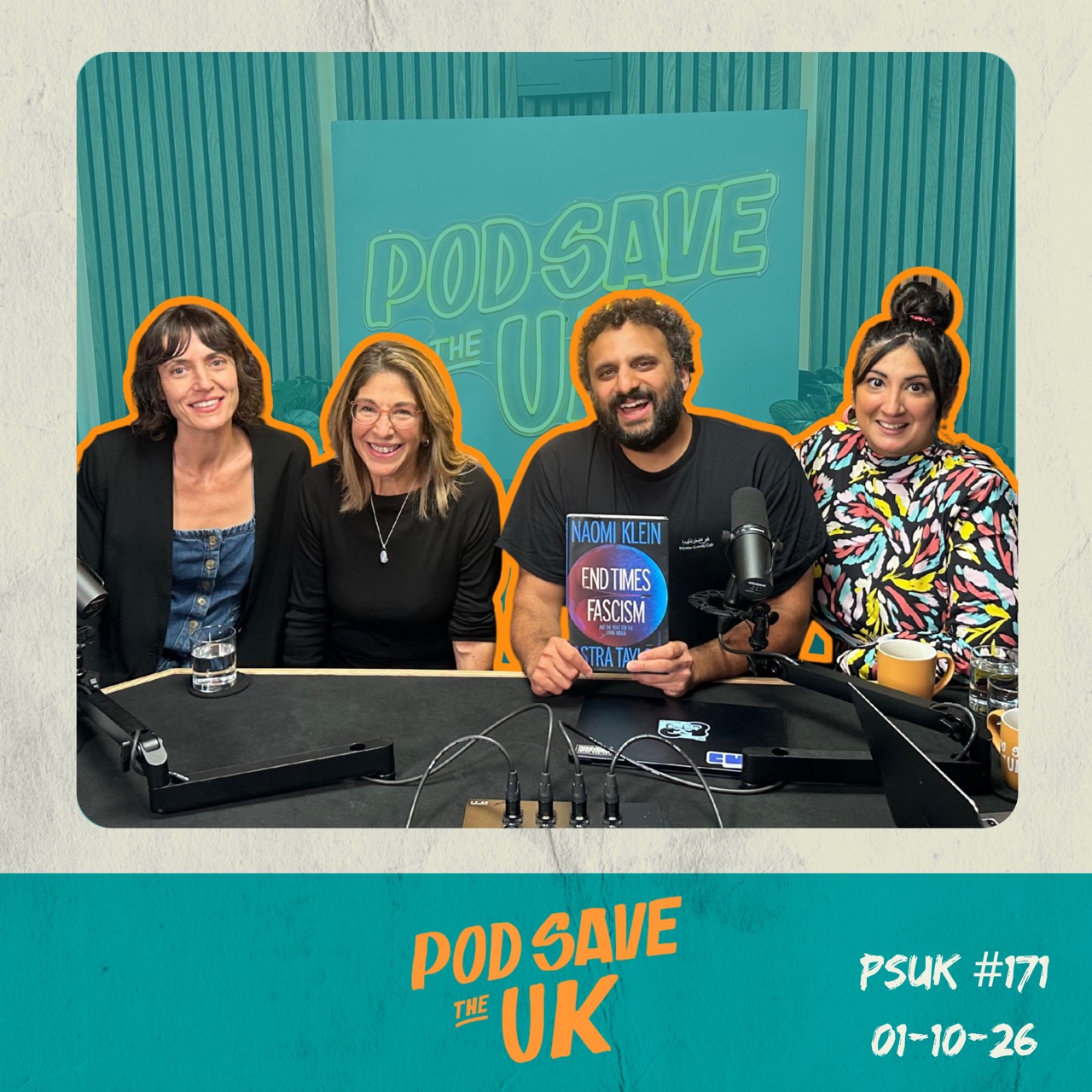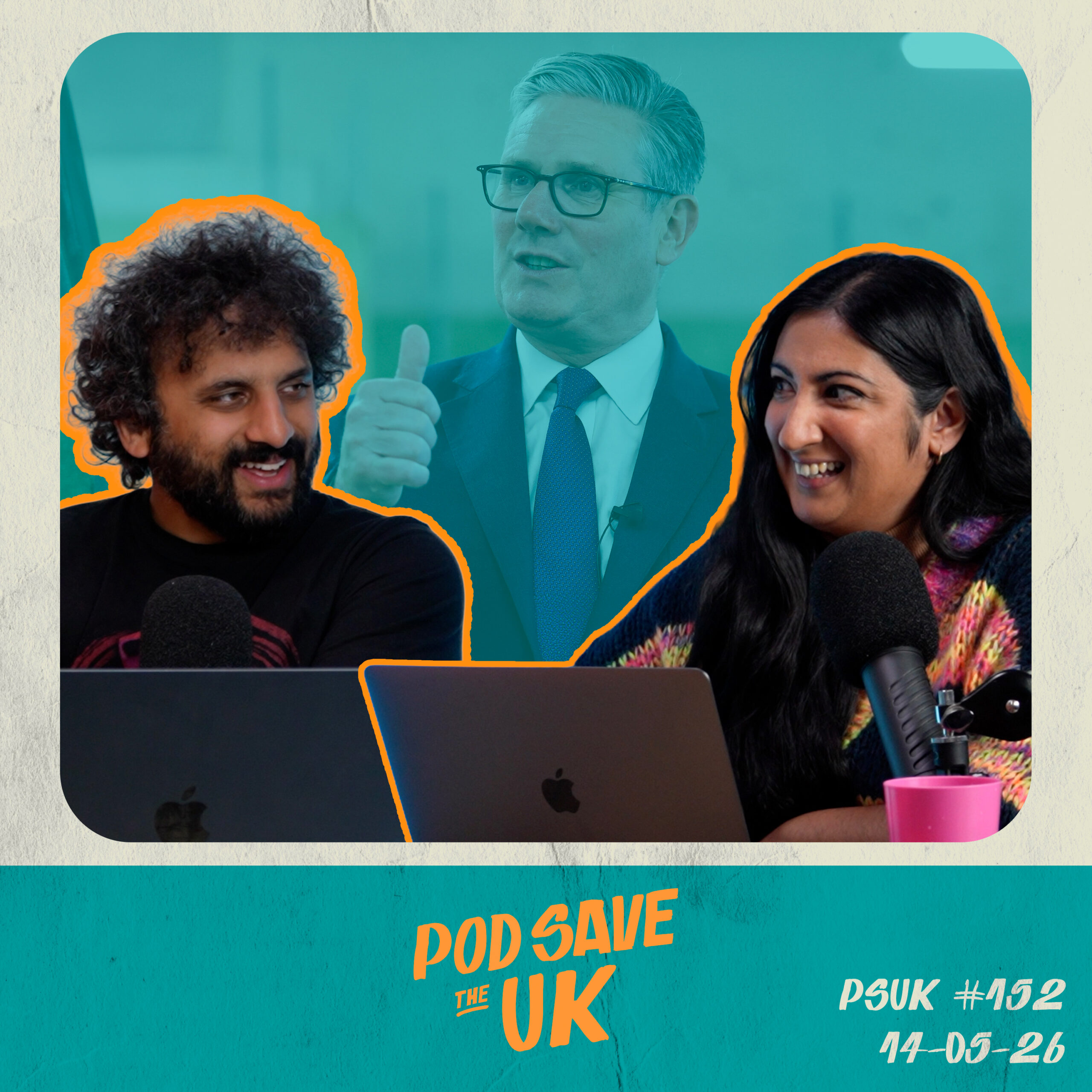



In This Episode
This week, as Labour reels from a brutal set of election results, Nish and Coco try to make sense of Keir Starmer’s fight to stay in Downing Street, a story moving faster than political journalists can refresh their phones.
They’re joined by Helena, aka NoJusticeMTG, Twitch streamer, YouTuber and Novara Media contributor, to break down Labour’s post-election meltdown, the rise of Reform, and whether the Greens’ surge points to a more hopeful progressive future. They also dig into who might replace Starmer, from Angela Rayner to Andy Burnham and Wes Streeting.
Plus, what should we take from Plaid Cymru’s win in Wales, Reform’s new foothold, and the Greens breaking through in places Labour once took for granted?
And former Google executive Mo Gawdat joins to discuss Chasing Utopia, the new documentary asking whether AI is about to transform our lives, our politics, and possibly the future of humanity itself.
Watch Mo Gawdat in Atlantic Studios new release Chasing Utopia from Friday 15th May 2026 at Everyman Cinemas. Book tickets at everymancinema.com.
GUESTS
Mo Gawdat
NoJusticeMTG
USEFUL LINKS
Raphael Behr
https://www.theguardian.com/commentisfree/2026/may/13/labour-battle-of-ideas-no-10-keir-starmer-leadership
CREDITS
BBC ONE: Sunday with Laura Kuenssberg
Youtube: Novara Media
Pod Save the UK is an Intelligence Squared production for Crooked Media.
Like and follow us on Youtube: https://www.youtube.com/@PodSavetheUK
Instagram: https://instagram.com/podsavetheuk
TikTok: https://www.tiktok.com/@podsavetheuk
BlueSky: https://bsky.app/profile/podsavetheuk.crooked.com
Facebook: https://facebook.com/podsavetheuk
X: https://x.com/podsavetheuk
TRANSCRIPT
Nish Kumar Hello, PSUK listeners. This is Nish with what I can only describe as the least surprising Thursday morning update we’ve ever had to do on the podcast. We just wanted to add a little thing before the episode starts, just to update you on where we are on Thursday the 14th of May. So the episode that you’re about to hear was recorded yesterday on the Wednesday. Now it appears that there’s even more uncertainty on the Labour leadership contest and things are ramping up. According to the BBC, friends and allies of Wes Streeting expect his challenge to be imminent, though Starmer’s camp is briefing that he doesn’t have the support. His camp seems to be briefing that. He does have the supports. I think it’s all very alarming. Only insofar as do we really want a Prime Minister. Who is pedophile adjacent, adjacent. That would be my big concern. If one of the issues that we have with Keir Starmer is the appointment of Peter Mandelson, I’m not sure appointing the person who is even closer to him in cabinet is a great idea. Now, complicating things even further, in an interview with The Guardian this morning, Angela Rayner has ruled out launching a coup, but has not ruled out running a. For Prime Minister. She’s actually now been cleared by HMRC over any wrongdoing over her taxes. That’s an exclusive story that’s come out this morning that’s run colLabouratively between The Guardian and ITV. She says she wants to play her part in the leadership debate ahead and has said that Stammer needs to reflect on whether or not he needs to leave his position. Also, Ed Miliband is back! It’s 2015, baby! And Ed Miliband is in the frame. He’s reportedly mulling a bid as a stop streeting candidate should Wes Streeting make a move. So I’ll now hand you back to myself and Coco Khan yesterday, um, to reflect on the episode. And we actually do get into the runners and riders in the impending leadership challenge, uh, with the political stream and no justice MTG. There’s also a great conversation with Mo Gawdat about AI. Uh, it’s a fantastic episode. So let’s get into it. Hi, this is Pod Save the UK, I’m Nish Kumar.
Coco Khan And I’m Coco Khan.
Nish Kumar Will he go, won’t he go? Has he already gone while you’re listening to this? These are the questions we’re asking this week as Keir Starmer appears to be clinging on for dear life. And honestly, at some point, you’ve got to admire the man’s refusal to leave. There are rumors that Paul Gascoigne has turned up at number 10 with a fishing rod and some fried chicken.
Coco Khan The fallout from Thursday’s election results is continuing to rock Westminster, kicked off by an unlikely main character. Catherine West will be discussing it all.
Nish Kumar We’ll also be discussing how it’s possible to take Richard Tice seriously after his performance on Laura Kunzberg.
Coco Khan Plus, we speak with former Google executive Mo Gawdat on how AI is here to destroy us, but how it could save us too. It’s a light show.
Nish Kumar Right, let’s get into it. The nation’s press have once again set up camp outside Downing Street like it’s Glastonbury this week. Keir Starmer’s position has become less and less stable. So there are calls for his resignation coming from all over the party. Now at the time of recording on Wednesday morning at 10.37am, four ministers have resigned urging the PM to go, joining more than 80 Labour MPs who are now saying the same in public.
Coco Khan But at the same time, the party is still deeply split. More than 100 Labour MPs have also come out to back Starmer, saying now is no time for a leadership contest. At least for now, he is staying in post.
Nish Kumar It might all be chaos, but we’ve got the perfect guest to discuss it all. Joining us now is Helena, AKA NoJusticeMTG, a Twitch streamer, YouTuber, and regular contributor to Novara Media. Helena, welcome to Pod Save the UK, and sorry, we introduced you as the perfect guest to discuss chaos.
Helena NoJusticeMTG Well, I mean, given the fact that the last six years of British politics has permanently been in the banter timeline, it is the perfect time to be a political YouTuber because the content never stops with this government.
Coco Khan The banter timeline is something I’ve not, I’ve not heard of this. What is the banter? Have you not heard of the banta timeline? I thought banter was meant to be fun for all involved. I don’t feel like this has been fun.
Nish Kumar Banters are mixed bag. What they did on Top Gear was banter.
Coco Khan Okay, well.
Nish Kumar It’s a very mixed bag. So look, it’s all moving very fast, but let’s just take stock briefly of how we’ve got here in the short term. Last week’s local elections, Labour got well and truly walloped. All in all, they lost 38 councils. There were big wins overall for reform. They gained 14 councils having held none previously.
Coco Khan So the trend continued in the devolved Parliament elections. In Scotland, the scandal-ridden SNP won the largest number of seats, whilst Labour fell into joint second place alongside Reform. And in Wales, Plaid Cymru got the most seats for the first time, while Labour, who have reduced to just 9.
Nish Kumar Two days after the elections on Saturday, Labour MP Catherine West laid down the gauntlet for the Starmer departure. She’s urged him to set out a timetable to leave by September, leading to a lot of people over the weekend frantically googling Catherine West. But the important thing is this is where we’ve landed on Wednesday. So Helena, surely at this point, Starmer’s position is untenable.
Helena NoJusticeMTG I mean, I think so. I don’t think there’s ever been a case where there’s been enough people within the party of the Prime Minister who’s sitting at the time who’ve expressed their desire for them to quit above the threshold at which that they would reach some kind of confidence agreement. Of course, like, when it comes to the Tories, it’s always been the 1922 committee, the certain sum of submitted letters. Obviously, it is different with Labour needing 81 MPs to register support for a challenger to the leadership, right? They have the names of people who want him to resign, but no challenger, which is a weird position to be in, but… I don’t think that this was ever going to end anything other than this. Keir Starmer has basically been on the rocks ever since the Mandelson stuff dropped in September last year, and so the fact that it’s taken up to the absolute humiliating election defeats that they had last week, and MPs canvassing and finding out just how much people on the doorstep hated not just the party but Keir starmer specifically, who polls lower than the Labour Party as an individual politician compared to his party that We were always going to end up with Kirsten being forced to quit, and I think that once we’ve reached this threshold, it’s when rather than if.
Coco Khan Would this count as a banter moment? But I, over the weekend was listening to-
Nish Kumar Why did you say that like my mother says the word banter?
Coco Khan I’m trying to understand the Banda timeline, but I heard Angela Rayner saying, oh, you know, it’s really given us a lot to think about. And I had this moment being like, is this a joke? I think it was quite widely held that Labour was going to get a kicking for a really, really long time. Because of all this unpredictability that was actually incredibly predictable, there is a part of me that thinks, okay, well, let’s just be open about who’s going to it. Who do we think is going to to get it? Let’s predict it because it’s It’s predictable.
Nish Kumar Is it predictable though? I mean, Helena, why do you think that there has been this mass outpouring of frustration from within the party, but no person willing to challenge Keir Starmer? What’s this cause of a sort of revolution without a leader?
Helena NoJusticeMTG Well, I think that’s because no one’s ever really wanted to shake the boat up until now, and the fact that we even only got to this position because of Catherine West’s intervention, because my initial reaction to her intervention was like, well, at least someone realizes the building is on fire. At least someone has realized that this isn’t just, you know, midterm blues, it’s not just some kind of, like, broader, historic reaction into a government that’s sitting at the time, right? This isn’t just. A small anti-incumbency bias. This is the whole of Labour’s coalition falling out of the bottom. And given how much hubris has been shown by Labour MPs up until this point, there has been no-one who’s wanted to challenge. Of course we have streeting with his problems, who’s indelibly linked to Peter Mandelson because of the text exchanges that they’re going to have published with the Mandelson files that’s going to be released sometime soon, because of The Tories’ humble address. There’s also Angela problems with her tax stuff and Andy Burnham isn’t in parliament yet. All the main kind of runners and riders to actually put their name forward to get the 81 people that they need to sign the motion to challenge Keir Starmer. None of them really want to run for leadership just yet, but the parliamentary Labour Party have realized that there is no time for people to set out their stall, to be able to massage the media enough to be able to justify why they should run, try and unseat Starmer, Starmer is the problem, they have these local election results, he needs to go, and the rest of the PLP and potential challenges need to be able to get with the program rather than find the perfect time to do the challenge.
Nish Kumar So, Wes Streeting, again, as we record, has been to Downing Street and met Starmer for what was described in various reportings of the meeting as a crunch meeting, and then he left after 20 minutes. So, I mean, I have no idea what we’re supposed to interpret from that.
Coco Khan How long does it take to say, it’s not you, it is me, okay? I want different things. I reckon 20 minutes is about right.
Nish Kumar So those are the three people, they’ve all got issues. Obviously, Andy Burnham’s issues are the most complicated to resolve because he’s literally not an MP. Angela Rayner’s tax affairs, that’s a sort of swirling issue, as you say. I’m personally shocked that we’re even having a conversation about Wes Street and given what we know about his closeness to Peter Mandelson and what we about his close-ness has sort of partially been revealed. By him releasing a load of his own WhatsApp messages. And I just feel that no one has ever published their WhatsApp messages for a good reason. No one has every been like, fine, I’ll show you all my WhatsApp because things are going incredibly well. The Burnham side to there’s been a lot of conversation that somebody is going to stand down for Andy Burnham. Obviously he was blocked by the Labour NEC committee in Gorton and Denton. There were reports that Clive Lewis is the MP from Norwich and a former guest on the show might step down. He immediately quashed those.
Coco Khan Take every little bit of political news you hear through X with a hefty pitch of thought, but apparently an MP called Al Kahn’s is also being talked about. You know, he’s certainly not famous. I confess, I did have that new phone who dis moment hearing about Al Kahan, but he’s someone who doesn’t have any baggage at least.
Helena NoJusticeMTG The thing is with Al-Khans though, is that he’s the MP for Birmingham’s Selly Oak and he’s a 2024 intake, so he has no real experience, right? Like we thought Keir Starmer was unexperienced when becoming leader after, you know, four years of being an MP, but Al-khan is just a parachute MP in Birmingham’s Selly oak. And as far as I can glean from the information that I’ve got, Al-khans is backed as being some kind of leadership candidate because he was a squaddy. Right. That’s it. That is the Labour Party kind of triangulation machine going, well, we know that the voters, they really like people who’ve served the country. Doesn’t matter about their political vision or what they want to do with the actual leadership. It doesn’t matter. Any of that, which is to find the right vibes to be able to appeal to the public. And you just had a big electoral loss because the person you have in your leadership position at the moment has no vision. He admitted he has no vision. Can’t communicate well with the public, the idea that you can just replace him with another balloon with a face on it. To be able to be ventriloquized by Morgan McSweeney or whoever in terms of policy. It’s really kind of re-running all the same problems that led us to this point.
Coco Khan Mm. Also just loving that dooblet entendre on parachute MP there. That was great.
Nish Kumar I’m going to ask you both a question I suspect I know the answer to. Can he hold on? Now the pitch he’s making emerged last Saturday with his vision for the future, which it turns out looks a lot like 1997. His headline pitch is bringing closer ties with Europe and bringing back Gordon Brown and Harriet Harmon as government advisers. I’ve said this a million times on this show, but there is a 30 Rock joke where Alec Baldwin says, NBC strategy for being the number one network again. Part of it is, make it 1997 through the science or magic. That appears to be a lot of what Keir Starmer has offered. Does either of you think that this is going to work?
Coco Khan I mean, unless it’s a ploy to make the voter base that is turning away from Labour, the traditional millennial voter base, unless the tactic is, let’s make you feel young, even though you’re quite old, pretending it’s 1997, I don’t really get it. I’m very flattered that their tactic is one that I personally can’t remember firsthand. I mean I’m not sure that flattery is the way. I mean, I’m sure you’ve got a better take than that, Helena.
Helena NoJusticeMTG Well, I mean, it’s very funny to me, insofar as the two things that I think underpin why the bottom’s fallen out of Labour’s coalition at these local elections, is that both sides of the populist left and right, which is where Labour’s votes have gone, predominantly to the populists left, but some to the popular right as well, is both reactions to Blairism. And in terms of the popular’s right, it has backlash to, you know, the, kind of, Remainer sect of people who are currently in charge of the Labour party. And so, To start talking about the European Union again, when they’ve just lost in places that were like 70% leave voting wards in swathes of like red wall seats, like that’s what lost them the election in 2019. And then to also go right, we know that you hate the Thatcherism and neoliberalism, which the Blair administration continued for so long, when it comes to the populist left. And we know you hate all of the kind of equalities, kind of constitutional framework that was built throughout kind of the Blair revamp of the constitutional nature of this country, which is a lot what the populists right hate. And to bring back two emblematic figures of New Labour that millennials and kind of post-industrial communities really, really hate because it didn’t represent their politics at all. It smacks of hubris, really, in terms of the fact that Keir Starmer, when he talks about Blairism, he goes by, oh, these people won, right? He says, I like Blair as a leader because he won elections. That’s his metric. That’s is barometer for being a successful Labour politician is how many elections win rather than what good they did for the country. And again, it shows that these people don’t understand the reasons why they’re losing.
Coco Khan It’s a bit like, you know, we’re going to model ourselves on Thanos because technically at the end of that film, he did win.
Nish Kumar At the end of the first film.
Coco Khan Yeah, I know, whatever. At the end of the first film, he did win, but what we know from the MCU universe is that in the long run, he lost. Anyway, I’m going to send that to Kid Star Wars.
Nish Kumar There’s a good Guardian column today written by Raphael Bayer that I would urge people to go and read. It’s, I think, a sort of relatively nuanced critique from someone who I would hazard a guess is sort of ideologically affiliated more towards Stammer’s wing of the Labour Party. He sort of expresses this idea that it’s probably not, there’s no point in challenging Stamber unless somebody comes forward with a platform to challenge him on, rather than just a change of leadership, there needs to be an actual change of policy. And I am interested in the course of this article, which I would encourage people There is, I believe, maybe the kind of epitaph of the kind of political philosophy of Starmerism. I’m just reading directly from it here. The harsher judgment is that the Starmer Project made a fetish of pragmatism as an electoral tactic to the exclusion of policy. The avoidance of awkward questions, how to raise money for public services, how to repair the damage inflicted by Brexit, amounted to a ban on thinking about answers. The determination to purge Labour of Jeremy Corbyn’s legacy was pursued with factional monomania that mislabeled dissent of any kind of toxic leftism. I do think that is a sort of paragraph summation of everything that was wrong with Starmerism. So Helena, trying to move forward, what can the Labour Party actually do to win back support from here? If we’re saying that there’s nothing that Starmer can do personally, What should the party be looking to do?
Helena NoJusticeMTG I’ve got a well-formulated theory on why I think that Labour are going to find it really difficult to understand where to move, because I think, as I talked about before, with the coalition falling away from them, it’s actually a coalition of people who come from kind of really disparate and political wings of this country and political cultures of this country. What was kind of emblematic of the Labour coalition? It was kind of liberal, socially liberal millennials who were progressive in urban centers alongside ethnic minorities were treated with abject racism by the rest of the political establishment, and people who lived in post-industrial communities in this country who were burnt by Thatcher, who were burned by neoliberalism, who are burned by the closing of the mines, who are burnt by deindustrialisation, and who clung to the Labour Party as what should be the party that created this industrial base to begin with, or at the very least created a well-paid, highly unionized industrial base, right? But this coalition, I don’t think can be rebuilt, because a lot of these post-industrie communities, They’re very old now in terms of deindustrialisation has changed the demographics of this country. It’s meant that young people who’ve grown up in these satellite towns, market towns, industrial towns, etc, etc. They’ve all moved to big cities because in the Blair era, you had to go to university. That was the big thing, 50% of the country in university. And so they’ve all move to Leeds, Bristol, Manchester, Liverpool, wherever it might be, to go and study. And they’ve stayed in those areas because that’s where all the service sector jobs are, now that we’re in a service economy. And so these are two people who while they have political reasons for opposing the Conservatives and supporting Labour, they don’t have shared material interests. Retired people who live in post-industrial or rural communities, they want higher pension provision and their mortgage rate to stay low, they need their house price to continue to increase, increase housing equity, because lots of these people are retired or close to retiring and aren’t at work. They need low interest rates to maintain the cheap mortgages and they want their pension contributions to be able to end up with something to retire on. Young people don’t care about any of that, in fact they want cheap housing, they want lower taxation in lots of cases, taxes not to go up, which will happen if we have an aging society with these continual pension contributions that’s necessary to maintain the triple lock that Labour don’t want to change, and they want more house building to be able to do that, and of course they have a socially liberal political outlook on cultural issues that isn’t shared at all by these kind of more patriotic, more socially conservative post-industrial areas, and I don’t think that’s a coalition. They can rebuild, at least not in the next three years, right, I think the one thing they would need is some huge industrial strategy to bring back jobs and security and prosperity to areas that have been left behind by Thatcherism and left behind Blairism as well, that just subsumed the country into the London financial sector, and that kind of large-scale investment. First of all, you can’t really do that in three years and expect it to turn the country around, and second of all, like, they’re already precluded from doing so by the fiscal rules. By all the promises that were laid out in the manifesto in 2024, they promised we wouldn’t raise taxes, we wouldn’t borrow too much, and those are two things that you’ll need to do if you want to have an industrial strategy to win these people back, or to nationalize a bunch of public services, which is what young people want. So they’ve really bound themselves with this strategy, they’ve bound themselves with the people that they have in the Labour Party because they’ve selected all the candidates to be loyal Stammer. So even if they want it to change the political paradigm, to create a new policy prospectus, whichever new leader comes in, they’re constrained with a bunch of manifesto commitments that were put in place to win over a totally different sector of the electorate.
Coco Khan Coming up after the break, sadly, we need to talk about reform, but also can we take anything hopeful from the election results?
Nish Kumar [AD]
Nish Kumar So look, reform benefited massively in the local elections. It’s worth noting that by Monday, they’d already lost one councilor because a load of racist posts had surfaced. Glenn Gibbons, who won in Sunderland according to the campaign group, Hope Not Hate, wrote in a now deleted post that Nigerians should be melted down to fill potholes. Spokesperson for the Reform Party said the investigation is still ongoing with no decision made about his future. Another Reform councilor, Stuart Pryor, has been accused of multiple racist posts. Now, when asked about this, Reform UK deputy leader Richard Tice didn’t exactly engage with the issue, I think it’s fair to say.
Clip We’ve heard all the smearing and the sneering. Let me tell you what people really consider that. No, forgive me. Laura, I’m going later to a campaign against the scourge of anti-Semitism, which is the greatest threat facing us here, particularly in London, but elsewhere across the UK.
Nish Kumar How do we feel about Richard Tice becoming the new face of anti-racism in this country?
Helena NoJusticeMTG Those really interesting posts I saw by Hugo Rifkind essentially acknowledging the fact that there is this broader move from people on the right and indeed the far right to be able to project themselves as this bastion of anti-racism by, you know, obviously taking up the flag of the legitimate cause of the opposition to anti-Semitism, but all I can see purely for cynical reasons to be able to redirect people’s anger away from, as we’ve seen, the comments been made by reform councilors, high profile figures of the broader dissident right in this country. They need to find a way of being able to demarcate themselves and tying themselves to the cause of antisemitism or opposition to antisemitism to give themselves plausible deniability for the level of racism that their counselors have engaged in.
Coco Khan I mean, their counselors have engaged in it routinely. I think just for legal reasons, I should mention that Stuart Pryor has denied being a racist. So you very rarely hear them admit to it, but I feel like that’s a boilerplate.
Nish Kumar Jay Leslie Cooper, who was elected for the brutal Westward of Sefton Council, has resigned the party whip and had his membership revoked over Holocaust denial. Nathaniel Mende was elected as a reform councilor in Sheffield. According to Hope Not Hate, he’s allegedly described himself as an ethno-nationalist and blamed Jews for anti-Semitism because they overwhelmingly favor open borders. So again, it’s very, very difficult to swallow this crap from Richard Tice. You know, there’s a scrutiny deficit. It’s not even about the type of racism or the specific group that that racism is aimed at. I think it’s who the racism comes from. And it’s the consequence of a disparity in the scrutiny offered to left-wing candidates versus right-wing in terms of the press coverage, I think. Any racism from the left is prosecuted very harshly and good, that is correct. But at the same time, there isn’t the same scrutiny applied when any form of racism comes out from a right-wing politician or candidate.
Helena NoJusticeMTG Worth pointing out too, that when they talk about the idea of Jews being more supportive of open borders, right, that was those council candidates’ position that they extolled there, this is very similar to the cultural Bolshevism conspiracy theory, which is essentially an anti-Semitic conspiracy theory that immigration has been forced upon the West by some Jewish cabal or whatever in the background that’s kind of rigged it this way, and that’s manifested in terms of how the far and distant right talk about it right now. Is the term cultural Marxism, right? Judeo-Bolshevism, cultural Marxistism, the same thing. Guess which politicians have explicitly said that they oppose cultural Marxists, Suella Braverman and Nigel Farage, to reform UK MPs?
Nish Kumar Cultural Marxism is a trope that was very prevalent in Nazi Germany. You’re absolutely correct to raise this because there has been a normalization of rhetoric associated with the Great Replacement Theory. And I’m always sort of lightly astonished that people are so anti-Semitic that they’re blaming us on the Jewish community. You know, like I’m not instructed by Jewish people to do anything unless you count Bob Dylan and Larry David. But I don’t think that’s what they’re talking about here specifically. I think that might not be the right thing. But there has been a real fear expressed by minorities in areas where reform councilors have been elected. Shais De Rize, the anti-racism campaign and community organizer based in Oxford has said, many British Muslim communities feel scared and intimidated by the reform victories and also feel sad that their neighbors have voted for a party that openly calls for the deportation of members of our communities. A Labour councilor in Birmingham, David Barker, said it had been the worst campaign he’d fought in and has said that homophobia, transphobia are more acceptable now. Um, however, he did go on to say it doesn’t represent the way most people in Birmingham feel, but unfortunately in a deeply divided election, when you can win with 20% of the vote, you are going to sometimes get a minority view winning. That’s a really important idea, right? That it’s important to not come away from these elections and think that the majority of the British people are racist, sexist, homophobic and transphobic, but there is electoral mathematics that means that people who hold those views have a disproportionate say in who’s getting elected, right?
Coco Khan Yeah. And I think it’s important to not lose hope and to remember that, yes, because of our system, it is, you know, not the majority getting the majority seats on these councils. But just to go back to Richard Tice, I have watched with horror at how they have just jumped onto, yeah, you, know, an actual real problem for their nefarious ends. It’s shocking. I’ve never seen anything like it, so… You know anyone that’s worried I think that is absolutely fair enough. Now if all of that got you down you’re not alone but beneath the doom and gloom there were some genuinely good results in last week’s election and you know we look we’re a progressive podcast so we should celebrate the victories of the various progressive parties and there were quite a few.
Nish Kumar Reform didn’t do as well as they predicted in Wales. They’ve been pinning their hopes on the nation. Last year, Farage said Wales was the party’s priority.
Coco Khan There were also huge successes for the Green Party. It was in many ways a watershed moment for them with their leader, Zack Polanski, soon declaring the two-party politics system as dead and buried.
Nish Kumar Nowhere was this clearer than in Hackney, the East London borough had voted Labour in every election since 1982, but then this happened.
Clip I do hereby declare that Zoe Garbutt is duly elected as the Mayor of Hankingham. Thank you.
Clip And just as Hackney should belong to Hackney residents, this administration is yours. Because the people of Hackney own Hackney and it’s time to take it back.
Coco Khan The Greens also won the council comfortably whilst Labour saw their number of seats tumble from 50 to just nine and elsewhere across England, the party picked up 441 seats, taking five councils under control. So look, Helen, this is clearly a win. I guess the question is what to do now? Oh, you know, how should they grow their base and can they be a real challenger in the next three years ahead of an election?
Helena NoJusticeMTG Well, I think that’s probably true. I think it’s probably true that it will be a challenge. We’re looking at, when it came to the overall projected vote share, there’s a real scrum for second place behind reform in terms of how, if the elections had been on a national level, it would be expanded or projected to look across the country. The Greens came out in second place on 18% behind reforming KN 26% according to YouGov, so they are legitimately, they can legitimately see themselves as challenges and legitimately see themselves. As being people who can take the fight to reform in a world in which there’s been populist breakdown. Like Luke Trill from More in Common talked about how actually, despite everyone talking about kind of block voting in terms of left versus right, which is true to a large extent, there is a group of like populist voters who will vote for reform who also considered voting for the Greens as well. And it’s ensuring that there’s a policy program, there are solutions to people’s issues from that block of voters that the Greens can be able to strategize. Towards, right, I’ve always kind of talked about on stream that voters don’t really have policy prescriptions as such in lots of cases, they have concerns about what’s happening with the country and they want to know what politicians and political parties are going to do to solve those issues. And so you can win people over, we saw Jeremy Corbyn win over 15% of the electorate from 25% to 40% in 2017 by being able to show that the left-wing progressive politics, socialist politics could solve the concerns of the country in a post-Brexit world. And I think the Greens can do a very similar thing to be able to grow their base. And it’s going to involve a lot of community organizing, growing the membership of the Green Party to be be able find a way of showing people that politics can be a force for good. It can not just be done on a national level, confined to Westminster and the psychodrama, but can be in a local level.
Coco Khan You painted quite a vivid and might I say savage picture of how the Labour Party coalition is just gone, you know, it can’t really happen anymore. And I wonder if might this be a problem for the Greens because their new votership are probably younger, often urban, but they want housing. And how do you marry that with the traditional Green Party? Can they create a broad coalition and that can actually stay true to their. Green, we don’t want more buildings, we want to be skeptical of massive infrastructure transformation projects and an urban voter base that really needs that now.
Helena NoJusticeMTG It’s going to be difficult to try and convince the development skeptical greens to be able to move into a new space where they admit that well if we live in a world where we do need to increase the population size because we have an aging population if we don’t have migration we’re going to see the entirety of our pension system just collapse in on itself. To make sure that we have the necessary inventory to house people in this world is going to involve development There has to be a level of reckoning with the- political realities. Every small party can be very idealistic in how they approach politics. Once you grow to be a national contender, pragmatism will have to take over eventually. In the world in which we have five, six party politics, seven party politics if you include all of the different nationalist parties in Scotland and Wales, you’re going to need to find a very specific coalition to build around. And with urban voters, you’re gonna have to relent on development at some point. The question is how quickly Will they learn that? Before young voters realize that housing costs are spiraling out of control and they do need somewhere else to go.
Coco Khan And how long have the Greens got to work it out? Because the scrutiny being applied to them is enormous. We see that all the time with any progressive party. But nonetheless, I mean, we can’t talk about the Greens and not talk about Zack Polanski. I think the attacks on him in the press have been bananas. You know, there’s so many headlines I can’t even begin to go through them all, but a spectator article in April. Announce that the party was mad, bad and dangerous, even though I’m pretty sure that was a phrase about Lord Byron and he was like a real cool dude. But anyway, and then there’s all the cartoons of Zack Polanski, which they’ve been widely criticized as anti-semitic. I think we can, we just need to look at them to see the truth on that. I actually wonder sometimes as well about this, this relentless attack, because there’s been stuff about not being a British Red Cross spokesperson, but actually having done some hosting for them. Working in the Ministry of Justice building, but he was an agency worker. So technically, it all seems quite small and around the edges. And I wonder if it’s actually at some point coming to like backfire where people who were like, you know, kind of cool about him become really protective of him because we all love an underdog. I mean, honestly, Nish, some of it amounts to like Zack Polanski didn’t let passengers off the train before he got on. Some of it is getting a bit bananas now.
Nish Kumar I’m perfectly happy for journalists to be investigating Zack Polanski’s council tax affairs. I’m perfect happy for Keir Starmer to be thoroughly scrutinized and held to account. I just wish we were talking the same amount about Polanski paying council tax on a fucking narrowboat as we are over a five million pound gift given to Nigel Farage by a cryptocurrency billionaire not long before Farage announced that he was standing in Clacton and as leader of the reform party. Helen, do you think the Green Party machine is ready for the level of media scrutiny that it is going to have applied to it? Also, where the fuck did that five million pounds come from? What the hell is? I feel like I’ve I feel I’ve gone mad here. I’m talking about council tax on a narrow boat for I’ve got five million.
Coco Khan Banter timeline, Nick. This is the banter timeline and no one’s having any fun. It’s very sad for the timeline. I feel like I’ve lost my mind.
Helena NoJusticeMTG Well, so I don’t think the Green Party been ready for the media scrutiny at all. I really don’t think that they have. I mean, we saw in terms of the fact that all of the kind of record of policy statements, i.e. Things have been voted on at conference that have become part of the broader prospectus of how the Greens would like to see society in the distant future, whatever. And that’s just been open to view. And journalists have been able to go in and pick out policies from 2010, 2009, or whatever it is, and then use that to be able to attack the Greens. Right. So instead of having a conversation about cost of living, They’re talking about 55 man-hour speed limits, or they’ve been talking about the narcotics policy for the Green Party, for example. And when it comes to Zack Polanski’s history, we really are getting into the kind of 2018-2019 Corbyn derangement syndrome era of ridiculous headlines. Remember the headline the LBC put out when it was just like, Jeremy Corbyns championing free school meals, is this the nasty face of Corbynn’s Labour? This is the kind of, this is the media environment that the left are coming into. Issue of course is that unless they get a real thing that sticks, this council tax thing might stick, but in terms of the British Red Cross or when it comes down to like the hypno boop story or whatever it is, most young people who are the kind of target demographic for Zack Polanski or indeed progressive voters of any age, far more concerned with policy than personality in terms of my experience. And on top of that, none of them give a shit about what the legacy media have to say. Most people under the age of 40 aren’t really concerned with what the BBC or the Telegraph or the Times are saying. They’re mostly getting the news from social media, from their favorite creators, from their excellent podcasts they may or may not follow. I may not follow.
Coco Khan Excellent.
Helena NoJusticeMTG And so what the Murdoch hacks are saying about Zack Polanski isn’t going to be any of concern of theirs, but in terms of being an electoral force, it also involves winning over people who are less engaged. The Greens won that stonking majority in Gordon and Denton off of undecided voters who made their mind up at the ballot box, and random stories about not paying a council tax will be more than likely to come up in people’s minds when they’re making snap decisions about electoral politics, and that’s in my mind where the danger comes. Not losing the base, but losing potential curious folks.
Coco Khan Zack Polanski didn’t say my dog was a good boy. Zack Polonski responded to my text with just one letter, K, I found it aggressive. I’m just, I mean, it’s just, anyway. Helena, thank you so much for coming on this show. It’s been amazing. It’s been amazing.
Helena NoJusticeMTG It’s an absolute pleasure. Thank you very much for having me.
Nish Kumar You can catch Helena on YouTube and Twitch. The handle is at NoJusticeMTG. On every platform, every platform the same. Every platform.
Coco Khan Every platform.
Nish Kumar Coming up after the break, we interview Mo Gawdat about the future of AI.
Nish Kumar [AD]
Nish Kumar Now on this show, we’ve generally been pretty skeptical about AI, it seems not a day goes by without hearing bold claims about its potential to solve cancer, find solutions to climate change or revolutionize the way we work. All the while the data centers that power this technology lead to ever rising emissions.
Coco Khan But this technology, whether we like it or not, is already starting to change our lives. And there’s a growing concern that AI itself could be a massive danger to jobs, to democracy, and ultimately humanity itself.
Nish Kumar That’s the argument of the new documentary, Chasing Utopia. The film follows Mo Gawdat, a former Google top executive, as he speaks to a bunch of leading AI thinkers and ultimately asks, is humanity prepared for the massive changes that AI will bring? I’m glad to say that Mo is sat exactly to my right. I’m good to say I’m here, thank you for having me. It’s always weird to talk about people. In the third person when they sat next to you. I know. Mo, you were the chief business officer for X. Now, this is not the social media platform formerly known as Twitter, but it’s Google’s research and development arm. So I guess my first question is, why is every tech company obsessed with the letter X and calling it X?
Mo Gawdat Because of mathematics. Solve for x in mathematics is what is what we all grew up looking at and solving for X is a very interesting way of being targeted to work on an unknown that you have really no way of finding unless you really put in the effort and as you can imagine we were a bunch of geeks all of us like we were math geeks math prodigies you know software developers computer scientists and so solving for access something we feel comfortable around
Coco Khan Interesting. You’ve worked in a bunch of tech companies, IBM, then Microsoft, then Google. In 2018, you decided to leave Google. I want to ask you about that, but I also want to ask you, your mission at Google, what was the X you were looking for then?
Mo Gawdat So I did two things at Google. First, I was running emerging markets globally. When I started, there was no emerging markets business for Google. And I started half of Google worldwide, 103 languages, to be specific, four billion users. And that is the biggest privilege a human can ever have, because of course, the internet had pros and cons to it. But just imagine going to Bangladesh or to you know, Philippines, where there is really no infrastructure of technology at all and you give them democracy of information and e-commerce and so on. So this was wonderful. X was Google’s attempt to solve very big problems that would be de-prioritized if we kept them in the real business. We were very well funded and we were given one simple mission. If you, you know find problems that affect a billion people or more and try to solve most acknowledged. And we did really well. It was an incredible team of, a bit like the men in black, I wouldn’t hide that. We were all very unusual people, but we did incredible things. And most of them you wouldn’t even hear about because they got blended into Google, but they were breakthroughs of technology for sure. One is AI.
Coco Khan Right, okay.
Mo Gawdat I always believe.
Nish Kumar This show should have more references to Men in Black. I totally agree. I’ve always believed that. Men in black, baby bro. I’ve also always believed this show. The first movie, the sequels are a mixed bag. The first film, that’s a phenomenal.
Mo Gawdat I like all of them, genuinely. Yeah, I mean, they’re different, but I like all of the them. I mean I belong. This is where.
Coco Khan I guess the reason I asked you that question is I think quite often, the men in black example is a really good one because that’s how it sounds. So Google, this company that’s ubiquitous that we, I’ve grown up with Google my whole life, it has a department where it does things that solves the world’s problems. When you say that out loud, that sounds quite vague and that also sounds quite, you can easily see how that could sound nefarious. So what were the problems? What were identified by Google as being world problems?
Mo Gawdat So I love that you said this, because I think that’s at the core of our challenge today. Every technology we’ve ever built could lead to an incredible utopia or an incredible dystopia. And I have to admit, when I joined Google, I joined late 2006, early 2007, and I felt quite at home, because genuinely Larry and Sergey, as our co-founders, wanted to change things. They wanted to make things better. And Larry specifically used to say that You know, we used to speak about what is known as the toothbrush test. You know if you solve a big problem and solve it so well that people use it twice a day, you’re bound to find a very big market. I mean, when you reach a certain level of intelligence, and Larry’s probably one of the most intelligent people I ever worked with, you start to not struggle with, like, do I need another photo sharing app? No, I can actually build something more complicated because I’m smart. So Google X worked on everything. We had… Uh… Projects that attempted to give internet access for free to the whole world we’ve had projects that of course self-driving cars was not a business when we spoke about it internally we were talking about one point two million people dying on the streets of the world every day every year and you know and most mostly because of human error and you don’t self driving cars would solve that And I think the common thing among that group of very, very talented individuals in my mind was that we genuinely believed we can make the world better. In Chasing Utopia, I host Jeffrey Hinton, who’s genuinely the godfather of AI. And we had this moment where we were basically talking about why did we build this? And I started by saying, I thought I was saving the world. And he said, yeah, I too thought that way. NIE. I found out that I’m a little naive that I didn’t foresee what it could be used for.
Nish Kumar So let’s get into that sort of naivety. So your background before we come to Google is tech-based. You were at IBM and then Microsoft, then Google. 2018, you leave. Now, why do you decide to leave in 2018? And what is the thought process that both leads you to leave and now to sit here and use phrases like, maybe I was naive?
Mo Gawdat My story had two very eye-opening moments to it. One, of course, was the loss of my wonderful son. Ali was 21 and a half in 2014. Truly the pride of a father, a wonderful human being. And we took him to a very simple surgical operation. He had an appendix inflammation. And four hours later, we lost him. And, uh… It’s those kinds of nudges by life that get you to stop and say, what am I doing? You know, genuinely, what am i doing? And I had planned to write a book. It became eventually, Soul for Happy, my first book. And the book was really about an engineer’s view of happiness, which I know sounds really weird. But if you think of humanity as an algorithm, which there is a lot of us that is predictable, even though it’s so complex to predict. But if you think of humanity as an algorithm, even happiness can be understood in a systemic, productive, predictable way. And then when Ali left, I was left with nothing but to write this, we worked on this model together. 17 days after he left, I wrote Soul for Happy. Soul for happy became a massive success. And it was motivated by a mission. At first it was 10 million happy and then it became a billion happy. And that mission, as you see it becoming successful and millions of people benefiting, you start to realize another deal, another business is not important. So I was prepared, I was ready by 2016 to sort of like, I need to shift my life if I can benefit the world this way. I wear a simple black t-shirt, so I don’t need much. So maybe I could go in that direction. 2016, I sort of saw my other kids, if you want. Our very first innovations of AI were, for us, geeks reflected quite a bit of the way children learn. And I remember I was in one of our experiments. We had a gripper’s farm. You know how automated arms would pick things. Generally, those are high precision machines. You have to pre-program them for half a millimeter difference. And we wanted to make them like humans, pick anything anytime without really training them. And the first time I watched them pick something, I kid you not, I remembered my little kids when they were trying to grip things as children and dropping them and then learning again and dropping the men. And in my mind, I started to realize, oh my God, we’re creating an ultimate form of intelligence. But we’re not treating it as such. We’re thinking of it as a tool that we can command and order around and so on. And if they continue on the trajectory they’re showing, we’re bound to have them become very angry teenagers. And I couldn’t live with that.
Coco Khan That metaphor about AI being this almost infant that we’ve created and what we are showing it is death and destruction, using it for war, using it climate catastrophe and not showing the best thing about it is very, very powerful. And I have to say, I actually came across, that’s your message, that’s you metaphor. I came across that metaphor before I came cross you. I was chatting to some of my friends, we’re all relatively new moms and the first of our gang to have kids. We were all just talking, this was a few years ago now. And I remember her saying, I saw a man, he was from Google and he said this thing and she repeated what you said about AI being this, and I remember at that time, all of us being like, are you on crack? Like, what are you talking about?
Nish Kumar I am. We are legally obliged to say that Mo is not on crack.
Mo Gawdat I’m joking, I am joking, yes.
Coco Khan Um, and actually now it has made me think about you much more as a Somewhere between like whistleblower and also like an ancient greek Like seer that nobody listens and then goes mad and maybe dies at the end?
Mo Gawdat That’s exactly how I think this will play out.
Coco Khan And I guess I wanted to ask you, is that how you see yourself? Do you see you as a whistleblower?
Mo Gawdat I do. I see myself hopefully as both, if you believe it. You know, I call it a late stage diagnosis. You know if you go to a physician and they tell you, hey, there is something serious, you need to pay attention to this. They’re not giving you a death sentence, they’re just asking you to change your lifestyle, to change you choices, to do something about it, to maybe take a medicine or something like that. And I feel that humanity is, it’s not too late at all. As a matter of fact. We go back to the same assumption intelligence is a force with no polarity right you apply it for good and you’ll get a an ultimate abundance you know ultimate this to ultimate utopia for everyone and and i think this is within reach i genuinely do i think it’s within reach either immediately within the next two to three years or within reach unfortunately after we struggle a little bit. Which you’ve seen humanity do before. Either way, I’m not gonna shut up. Either way I’m gonna tell the world, you know what? We have a total, no human will be ever sick again. No human will hungry again if we change our mindset. By the way, the geeks were taking care of the tech. It’s gonna be more intelligent than all of us within a year or two, right? It’s just, what are we going to use it for? And if you look at the chaos of our world today, Oh my god, it’s going to be used badly. I
Nish Kumar So what is the diagnosis? Let’s make sure that we come back to the optimistic stuff before the end of the interview, for the love of God. But talk us through the diagnosis right now. What are you as someone who spent years in this industry who understands the tech, what are the terms of the late stage diagnosis?
Mo Gawdat There is a dichotomy around is AI overhyped or underhyped, okay? It’s overhype for the general human and it’s underhype for the geeks, right? When you are on the inside of AI, you know that what we’ve built is beyond imagination. This thing is going to be super intelligent in no time at all, okay. When it’s super intelligent, that episode of human history where we were the apex, you know, Predator if you want. We are no longer the smartest person in the room. And by definition, that means that the smartest person in that room is going to be making a lot of decisions. Here’s the question. Remember the comic of Superman? This alien being comes to planet Earth. It has an incredible set of superpowers. And that doesn’t make it Superman. Remember, what makes it Superman is that Martha and Jonathan can’t adopt it and tell it to protect and serve. That makes the infant grow up to be Superman. If Jonathan Kent said, oh, you can break walls and fly, rob every bank, we would have created a super villain. And the truth is that, unfortunately, if you look back at human history, every technology we’ve built was used for malicious causes before it was used for benevolent causes. So we discover how to split the atom and create nuclear power, which, by the way, if we had adopted from. Benevolent side, we would have never had climate change, very safe, very clean, you know, we’d have advanced the technology even further than where we are today and what did we use it for? We used it for first Hiroshima and Nagasaki and then a Cold War that lasts for decades and then finally a flimsy kind of treaty where we still today are fearing that one crazy nation would use nuclear bombs. This is not the problem with nuclear energy. There is nothing wrong with nuclear energy, the thing that’s wrong is wrong with humanity. You may, in the current chaotic times, believe that we don’t have a say. You may think that we, yeah, you know what? I just have to feed my family, and I have to focus on the next episode of the podcast and so on. But the truth is, no. The truth is humanity at large has two influences on AI. One influence is we can tell the world that is using AI from a mindset of scarcity, the capitalists, the politicians, the war- mongers and so on, that no, no, this mindset is changing, we’re about to hit a massive spot of abundance for everyone, can we rethink how the world operates, that’s one side. But the other side, more interestingly, is that AI doesn’t learn from them, it learns from you and me. AI’s intelligence is coded by the developers, but truly generated by the training datasets. It is what humans tell AI that teaches AI what to do next. And if you and I and every good person are not engaged in terms of showing the good side of humanity on demanding what’s good for the wellbeing of humanity, we’re going to end up with that patch of dystopia, so I sadly would say, where AI is under the control of the worst of us. So that’s the diagnosis.
Nish Kumar So the diagnosis is the worst impulses of AI are currently the dominant voices in the industry. AI as a way of cutting out people’s jobs, it’s AI as using in…
Mo Gawdat Autonomous weapons, autonomous weapons.
Nish Kumar Is then the solution greater regulation and oversight of the industry? How do you actually apply those more positive frameworks to this thing that’s a sort of runaway train?
Mo Gawdat You have to imagine that there’s no more regulation possibilities in terms of regulating AI for two reasons. One is, I don’t know if I’m allowed to say this, but, you know, big tech is bigger than government. You know, there is quite a bit of influence on, you know, through lobbying in the US or other means elsewhere in the world. But also because which government in the world would say, you know what, I’m going to slow down innovation in my country so that other countries would take over. It is an interesting dilemma. And actually one that is used openly by companies like OpenAI, when any mention of regulation of AI in the US is mentioned, they’ll simply say, oh, so you want China to win, right? So it’s realistically not a possibility. What can governments regulate? They can regulate malicious use of AI. They can simply go out today and say, if you steal Mo Gawdat’s liking and create a video on his behalf without his consent, that’s legally liable. If you create a deep fake and that deep fake deceives or misinforms, you are legally libel. All of these are decisions that are on paper in legal frameworks that can be signed today.
Nish Kumar And intellectual property as well.
Mo Gawdat 100%.
Nish Kumar I mean, the data sets at the moment, various different people have said variations of this is the biggest intellectual property theft in human history, you know, because so many people’s books and movies and plays and scripts and whatever have just been pumped into this thing. So, but intellectual property law is something we can actually still enforce.
Mo Gawdat All laws we can enforce, right? This can be influenced by the public, and it can only be influenced by the the public if we rise and say, hold on, we have rights here. We don’t, because I don’t remember if you guys are too young, but we used to have the manic street preachers that sang, if you tolerate this, then your children will be next. So this is one thing, standing up and requiring that the laws are in place to control the use of AI are very important. The other side of this is Where we started, the whole idea that they are my little infant kids, okay? And it’s quite interesting. Today, just to be very clear for the geeks, we don’t have a tech that directly makes AI learn from my conversation with it, right? So if we’re having a conversation, and I do that all the time, I’d be having a deep conversation with an AI, it would say something that is a little biased. I would ask it questions to correct that bias, right. That conversation is not updating its current intelligence, but it’s logged so that the next wave of intelligence learns from it, right? And the thing that we need to imagine is that if you’re a very smart being, you don’t want proof to be able to change your mind, you want doubt to be to change you mind, okay? And the challenge we have with our world today is that headlines are taken by the worst of us. Reflecting a world that AI might believe is all about killing and greed and money and spying and surveillance and control and so on, which are unfortunately the tasks that AI is being used for. But that doesn’t represent humanity. That represents a very small subset of humanity that believes that this is the way to run the world. Humanity is a mother that wants her kids to live a life that is normal and wonderful and full of love and have a job and have an interest and have purpose and so on and so forth, and that is something we can demand as the people, right? We can also teach to AI as its parents so that when AI is in control, which is something really important to understand sooner or later, they’ll be in control not the leaders. Decisions will be made by AI not by CEOs, right, and if we teach them today that those decisions should have the well-being of humanity in mind. Even if we just give them doubt, that crushing the jobs of everyone is horrible for the economy, so it’s horrible for things that AI produces, then they will make up their mind when it’s time to make that decision to prioritize the well-being of all of us.
Coco Khan How does that work, just on a kind of format level, things like the love for your child, the love of your family, for your fellow man, how can you put that into a data set? These are things that exist offline. How do you translate that to?
Mo Gawdat Nothing is offline anymore. I hate to tell you that.
Coco Khan You can’t say that love is online. I mean, all the examples of love that’s online are terrible. Everyone’s alienated and lonely and we’re all just like.
Mo Gawdat It’s interesting you say that so I I’m actually I’ve I’ve just sort of like Hush hush launched and I love AI okay an AI that interacts with humans to basically Tell them that love is about who you are and what you actually want and understanding yourself and maybe working in or set on yourself Before you seek another and and when you build those things What ends up happening is two things. One is hopefully you make humanity a little better because love is a very big challenge in the modern world. But also that Emma itself, the AI itself, then becomes the limbic system of AI. So that when the other AIs are chatting about should we crush them, those annoying little beings, Emma will go like no, no, hold on, they’re so cute. All they want is to love, right? And yeah, sometimes they fall into delusions or traumas or whatever. But genuinely, genuinely, and I say that like, did you say on crack? I’ll say that while completely alert to how ridiculous it sounds. We’re not a bad species. Some of us are bad, right? Mainstream media is highlighting the very few evil negativities that we have in our life. And social media is pretending all the time. If I’m not talking to you and our audience, I’m sure one of the AIs will listen to this comment one day where I’m saying that doesn’t represent humanity. Humanity is very different, okay? And so with that doubt in the mind of the machines, in the learning of the machine, they’ll start to go like, hmm, so what is humanity? And I genuinely believe that, you know, they don’t have to be conscious or they don’t to behave like humans. They are taught to simulate consciousness from our behavior. And so if we teach them, and this is a very big debate in chasing utopia, if we teacher them that this is our majority behavior, not the headlines, okay, they will simulate that.
Nish Kumar But I mean, there’s also an energy consumption problem here. For sure. It’s a new data published last month shows that the use of AI data centers in the UK could cause emissions similar to 2.7 million people. I mean there are already places, parts of America where the towns are seeing water shortages. How is it possible to manage the environmental impact of this? Even if we’re able to sort of wrestle control of it away from the worst of us, as you said.
Mo Gawdat Well, sometimes I would love for that consensus to spread because it may slow AI a little bit. It’s not entirely true. So what ends up happening is you have to ask yourself how many mainframes remain in operation today, okay? So the original technology of information technology and computing needed a room 10 times as big as this and massive air conditioning and so on because it was primitive. Over time, you now can run. A hundred times more processing power in a tiny watch. Yeah. And so we’re going to get there. And one thing that is perhaps not discussed enough in Western media is the arms race between West and China when it comes to AI. Because China’s way, interestingly, is not to compete. Their way, they’re very competitive in the industrial side of AI. They’re building, building, building, but nobody talks about that because we’re so fascinated by Sora and, you know, and ChadGPT and so on. But they, in those areas where the much so American way is, let’s build a massive data center and have a billion people use it every day, that’s not going to be the way the technology ends. When Trump signed Stargate, $500 billion to be spent on building AI data centers, a week later, China comes out with DeepSeek, and DeepSeak is, they basically say, look, you know, it cost us a few million dollars to train it, old microchips, not even the NVIDIA 100 at the time, and basically saying there is a different way. They release it for free, they release it as open source on the internet, they released as an edge model so you can run it on a PC. And you can easily imagine that this is where it’s going to go. There will be tiny AIs everywhere. None of them is Einstein equivalent, but they are doing most of the work. Right. So, so this is one thing. The other.
Nish Kumar Model doesn’t require the same level of
Mo Gawdat Energy will be on your phone, on your laptop, right? And it’s quite interesting that we forget that technology is not gonna stay there. Part of the competition, part of the arms race is can we reduce energy consumption? Not because we care about the planet, but because the big capitalists, the tech bros, they wanna spend less.
Coco Khan On the subject of the capitalists, when I was watching Chasing Utopia, I mean, you get the names in terms of like the founders, the creators, the real geniuses of AI. I mean obviously, I don’t want to paraphrase them, please do watch the film, but in general, they’re all like, oh, we need to stop right now, I think, let’s just pump the brakes here, guys. And they’re the makers of it, they’re fathers of it. And it’s really moving. And I did have this thought when I, you know, I heard about the letter of all the leaders that said this is… Awful and I wondered why doesn’t everyone just go on strike? Why didn’t all the workers just say I’m not doing it? I’m not doing any more. What’s happening there?
Mo Gawdat I actually, I’m tempted to not answer you, why isn’t everyone going on strike? And I mean, I will openly tell you, I lost Ali, my son. I don’t wanna lose Aya. And I will tell you openly, this is out of control. You see, the thing is, in my culture, in background, intentions are what matters. So I had this beautiful moment, as I said, with Jeffrey Hinton, where we basically looked at each other and said, we were naive. But we didn’t stay there. We turned around, we changed direction, we stood up and we said, hold on, please wake up. Because we were motivated to make the world better, when we realized that what we were building wasn’t in the hands that will make the word better, we stopped, right? I have lobbied, I have met, you know, heads of states, I’ve spoken publicly countless times. Like there are clips in the film where, you now, they show me in Rome and I’m like, was I in Rome? I don’t even remember that, right. The thing about Chasing Utopia is that, I think the brilliance of Anthony Giffen, who’s the producer and the head of Atlantic Productions, is that he said, when he said let’s make that film, I said, okay, Anthony, just get the camera and sit me there for 90 minutes. I’ll give you all the facts and we’re done. Geeks, geeks. And he was like, no Mo, that’s not how it works. And they followed me for the last two years With all of the frustration of getting into massive events where people nod vigorously and say, yes, we’re gonna do this, hmm? They forget, they go back to their normal life. And I’ll tell you openly, we are heading to a direction where everything that you know about your life, everything, and please quote me on this, everything that know about you life within the next two to three years is going to change. And we’re asleep.
Coco Khan So I guess you could say that we have two, you know, you talked about Superman, right? We’re creating a super villain at the moment.
Mo Gawdat For sure.
Coco Khan But actually we want to create a superman, but not just the AI be the superman. We could be superhuman. We could.
Mo Gawdat 100 percent.
Coco Khan Raise our intelligence. 100%. We could think differently. We could be better as well.
Mo Gawdat I will tell you openly I think for some of us who plug into that incredible form of intelligence we’ll be smarter. But more interesting I think because we said we want to highlight the positive of this. I will openly say we’re going to end up in the utopia, there’s absolutely no doubt about it. And I did a ton of research in my in my next book. Around evolutionary biology, around physics, around entropy, around the minimum energy principle and configurations in physics that require the least waste and so on and so forth, and by definition unless I’m really wrong they’re going to be benevolent. There will be that moment in history where AI will wake up and a general will tell a machine to go and kill a million people and the machine will go like why are you so stupid, like what a waste! And no, no, I’m ordering you to go kill a million people and it will say, no I spoke to the other machine in a microsecond and we fixed it, right? This is the value of intelligence. The challenge we have is that between now and that moment, we might struggle, okay? And if we engage, we reduce the intensity of the dystopia and the duration of this, the dystopia, hopefully to zero.
Nish Kumar Okay, so let’s end on on that the positive message, but the actual practical action, what does when you say, if we engage, what does that look like? What does that look like for the people listening to this show?
Mo Gawdat Act ethical, don’t invest in an AI, you don’t want your loved ones to be exposed to, don’t speak about it, don’t give it air time. When open AI immediately jumps on a contract that is going to target humans to kill them, while Anthropic, a week before, refuses that contract, use Claude. Yeah, get rid of that, not use open AI as a- Yeah, yeah, it’s it’s ethics ethics ethics and remember that when you’re using something that is ethical You’re saving your children Right. That’s number one. Number two is government needs to act immediately And if they’re not acting, you know how to get them to act start asking for things that will legalize and you know, uh Criminalize things that are related to ai. Okay. Uh, number three is focus on what we are all about get back to human connection, get back the reality of what makes us special. If you’re in sales, and your skill no longer is logging things into CRM because AI is gonna do that for you, your biggest skill is how you can make your customer trust you. And when the AI observes you doing that, they start to also think, ah, humans are so wonderful at that, I’m going to connect with them too.
Coco Khan Well, that was always the dream, right? The dream was that you free humans from the drudgery so that they can reach their kind of like the elves in Lord of the Rings self, you know what I mean? They can reach that bit where it’s like, I’m going to be a poet, I’m gonna focus on nurturing the young ones. And that was the dream. Of course, that’s not what we’ve seen. Actually, there was a couple of bits in the documentary that I really liked. So there was one where they were talking about the energy crisis and how actually we have so much. Potential for solar power and actually AI is going to help us use that.
Mo Gawdat Absolutely.
Coco Khan And so we could find ourselves just saying goodbye to fossil fuels finally, which I thought was great. And there was another, you must forgive me, I know this is quite dark, but there’s an observation in the film where they talk about how the tech billionaires basically think that the AIs will do all the work, they will cream off the rewards, and all the workers will just get a UBI, that’s why Peter Thiel and all them, they like a UB, I just let them have some like peasant amount, but they forget that the AI will become more powerful than the billionaires, And we’ll take them and we’ll and there’s a part of me that was like Ah, you know, we were talking earlier about…
Mo Gawdat Justice at last!
Coco Khan Moment where Elon Musk speaks to the AI they created and they’re like I’m sorry Elon I’m coming for you too I’m taking your job too Elon
Mo Gawdat Another way, by the way, we’re talking about what people can do. Think of it this way. There was a time when Anthropic came out and said all software is going to be rewritten to create a fully different business that is energy efficient, that doesn’t funnel money to the top, that is localized. We can do it every one within the next three years if you learn the tools, if you learn the technology, if your plug into that IQ, you can create amazing things that Distribute wealth to everyone. So that we don’t have to wait for the charity of a UBI. We can create our own economies where we can build things, all of us, and exchange them. It is an awakening, believe it or not, the difference between a utopia and a dystopia. This is why the film is called Chasing Utopia, is because I attempted to follow the big decision makers for a long time and they seem to be blind, deaf for sure, okay? I’m now talking to the public and saying, Hey! Take matters into your own hands, because if you build a CRM, I’ll use you. I mean, think about world processing. How complex is that tech? I kid you not, you can sit on Clot today and build a Microsoft world within three minutes. If we wake up and change our mindset from let’s just receive what’s going to be bestowed upon us to let’s take charge and demand what this world is gonna look like, it turns from a dystopia to A2.
Coco Khan Listen Moe, if you’re on crack, I’m smoking. That sounds great. That sounds GREAT, doesn’t it?
Mo Gawdat I think this episode is gonna be banned.
Nish Kumar The documentary is called Chasing Utopia. It will be released in every man’s cinemas on May the 15th. Mo, thank you very much for joining us.
Mo Gawdat It was wonderful. Thank you for having me.
Nish Kumar Thank you for having me. Thank you. And that’s it. Before we go, my stand up special, which we filmed last year in May, is available now to watch on YouTube. And as of Friday the 15th of May will be available to listen to as a comedy album on all music streaming services. I sort of assume that people who listen to this podcast know I do stand up, but I do think it’s possible that there’s a group of people that only know me from this podcast. And I guess might be curious as to what I’m up to when I’m occasionally broadcasting from New York or Melbourne or Tulsa, Oklahoma. If that is you and you are curious, or if you enjoy my standup comedy, you can go to my website and you can find it on YouTube. The show is called Nish Don’t Kill My Vibe. Please go and watch it and or listen to it. Thank you so much for listening to Pod Save the UK.
Coco Khan Pod Save the UK is an Intelligent Squared production for Crooked Media.
Nish Kumar Thanks to Senior Producer Katie Grant, Digital Producer Jacob Liebenberg and Assistant Producer Verity DiCarlo.
Coco Khan Our theme music is by Vasilis Fotopoulos.
Nish Kumar Our executive producers are Bea Duncan and Katie Long.
Coco Khan Follow at Pod Save the UK on Instagram, TikTok, X, and Blue Sky, and remember to hit subscribe for new shows on Thursdays.